XXLargely seen – The visibility, accessibility and ideal fashion future for plus size people
In my project “XXLargely seen” I sought out to explore the visibility of plus size people in the current fashion industry, and what legitimacy they have as a market category and customer base. Using speculative design as my main method, I divided the project into two stages, “What is” (current state) and “what if” (what could be). In the first part I gathered data on the topic of plus size visibility in the fashion industry, using my own experiences, field studies, collaboration with a small clothing store owner and questionnaires to get the perspective of other plus size people. Taking the data I gathered, I made the focus in the second stage be about what would be the ideal fashion future for plus size people. By co-designing a store space with plus size people, I could visualize what this ideal fashion future would look like.

What does visibility mean in this context?
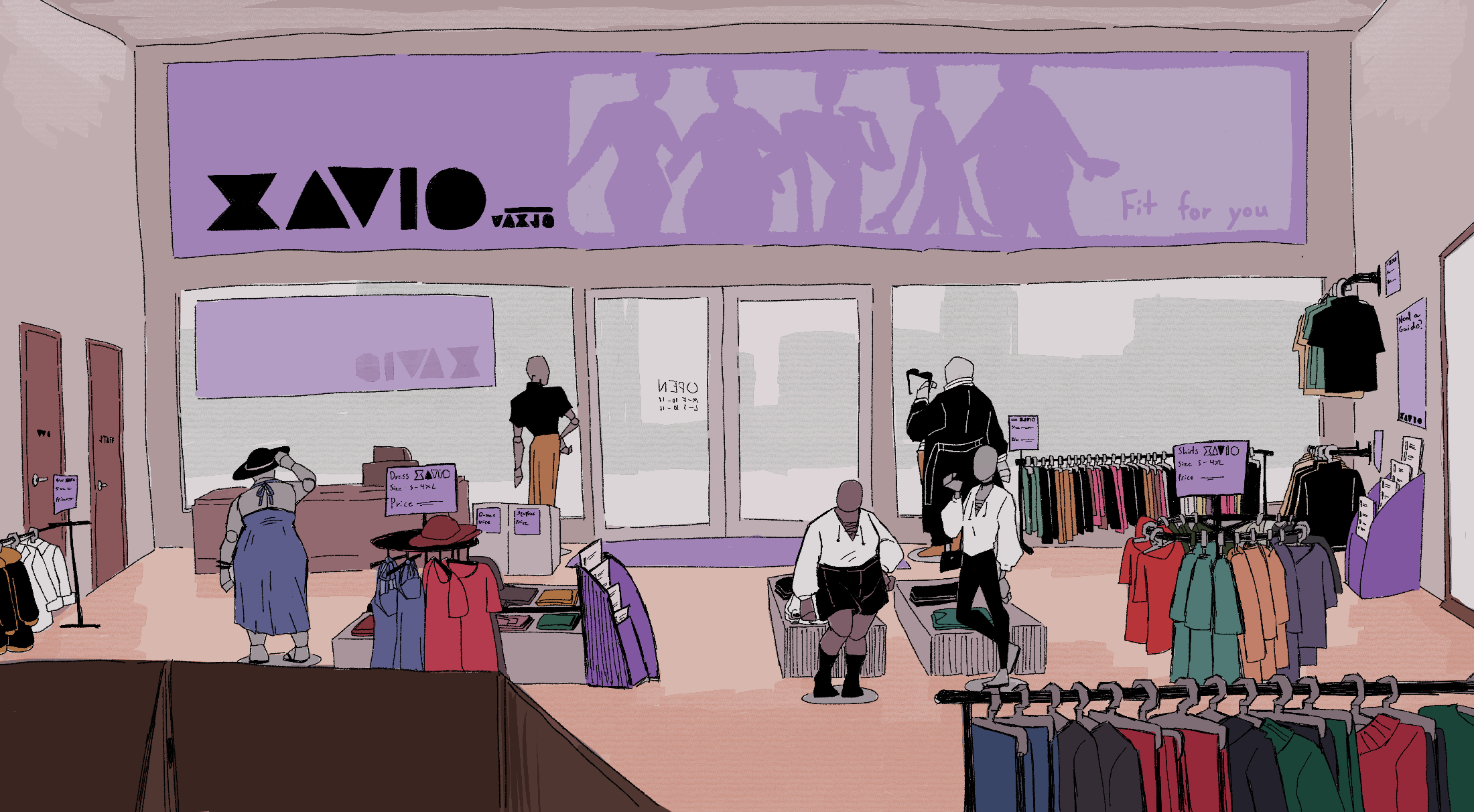
When I talk about visibility of plus size people, I mean it both in a production sense (how clothes are manufactured) to a store design sense (how clothes are displayed). I have taken inspiration from the article Dynamics between market categories: A study of the (in) visibility of the plus-size fashion market (2020) written by Delphine Dion and Béatrice Tachet, where they divide visibility into two groups: symbolic and physical visibility. Symbolic visibility refers to the ideal, the prototype that the industry upholds and promotes to the masses, i.e the supermodel. Long and thin is the ideal, and will therefore be the set standard in regards to clothes manufacturing, advertisement and general fashion knowledge. This is how the symbolic visibility affects the physical visibility, when you walk into a clothing store you will see thin mannequins and models in advertisements, clothes that are shaped to make your waist look smaller, the very idea of looking like the ideal is sold to you.
Where does plus size fashion fit into this context?
One thing Dion and Tachet writes about is the lack of a prototype for the plus size fashion market. This means that there is no ideal that the market wants to sell, and no set standard for people that fit into the plus size category. When looking at clothes in stores that are size L-XXL, you can see that they are just scaled up versions of small sized clothing, not taking how the clothing would drape differently on a larger body into account.
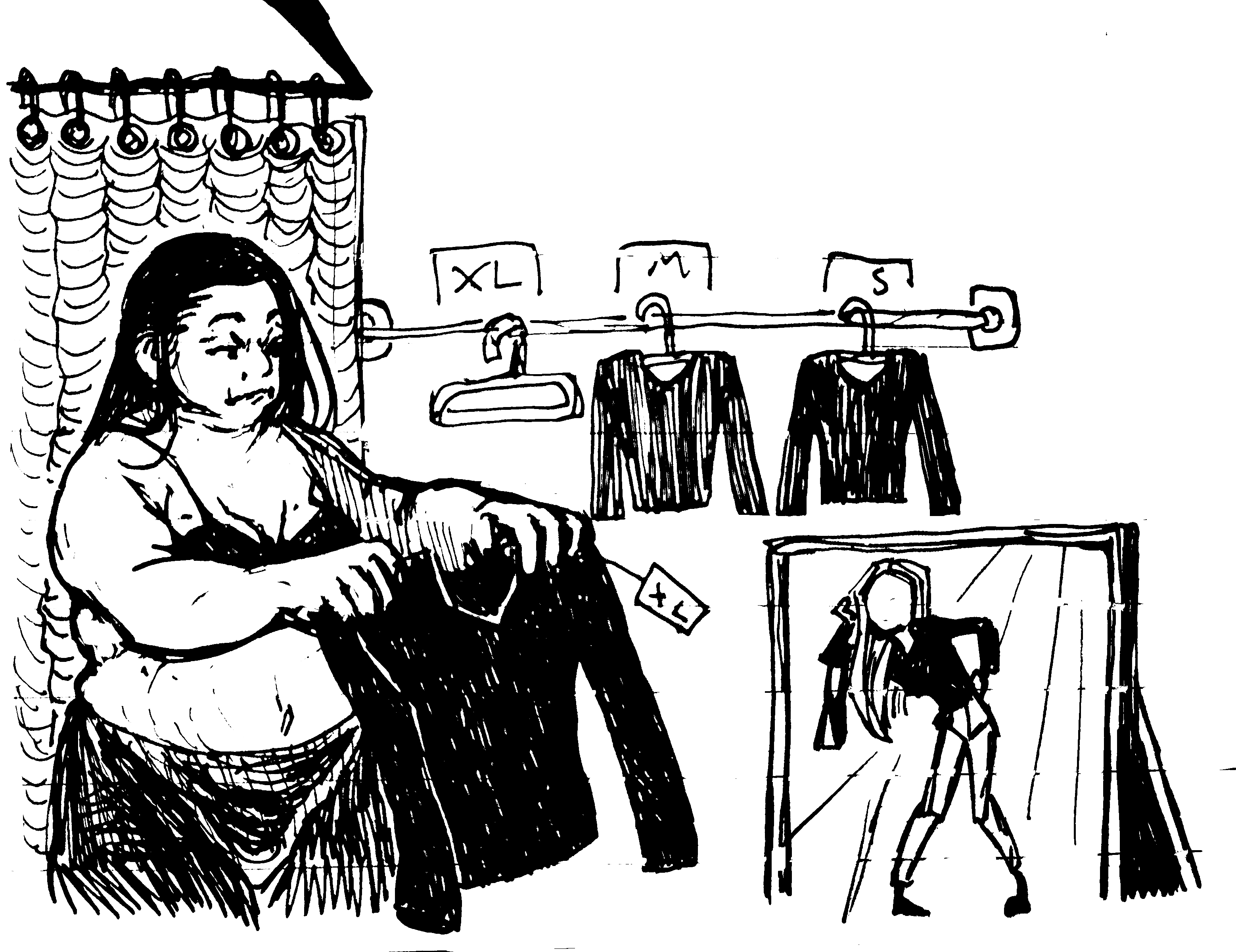
Stigmatization is another huge issue here, as larger bodies are still regarded as “unhealthy” bodies. This leads to a hesitancy to display plus size bodies in stores, as a way to avoid controversy that could damage the brand. Plus size brands are pushed further into the back of the store, where it will not be seen from the window, the way the clothes are displayed on racks tends to favor the small sizes in front while the larger sizes are pushed further into the wall, and the largest sizes a store has available are not even displayed inside the store, they’re in the storage, and the only way to know those sizes are available is by looking at the store’s online shop. All this lack of physical visibility signals to a plus size person that they are not seen here.
What is…
In the first stage of my project I had gathered data from field studies in Växjö. By going to multiple clothing stores and secondhand boutiques in the city, I analyzed how the clothes were displayed and how well the store communicated the size ranges that were available. My findings showed that the stores in Växjö were lacking in this department.
During my project I found a collaborator in Norrköping, a small store owner who has a strict policy on having a huge size range. I was allowed to display a poster in her store, with qr-code that would lead to a questionnaire for her customer base to answer.
“It would be nice to have clothes designed to make my body with a large tummy and butt look flattering, instead of trying to hide it”
“First and foremost, it is important that the clothes are shown on a larger body. A more realistic display is REALLY needed. The norms need to be adjusted to what’s real
“I’d like a store with a good seller that sees me”
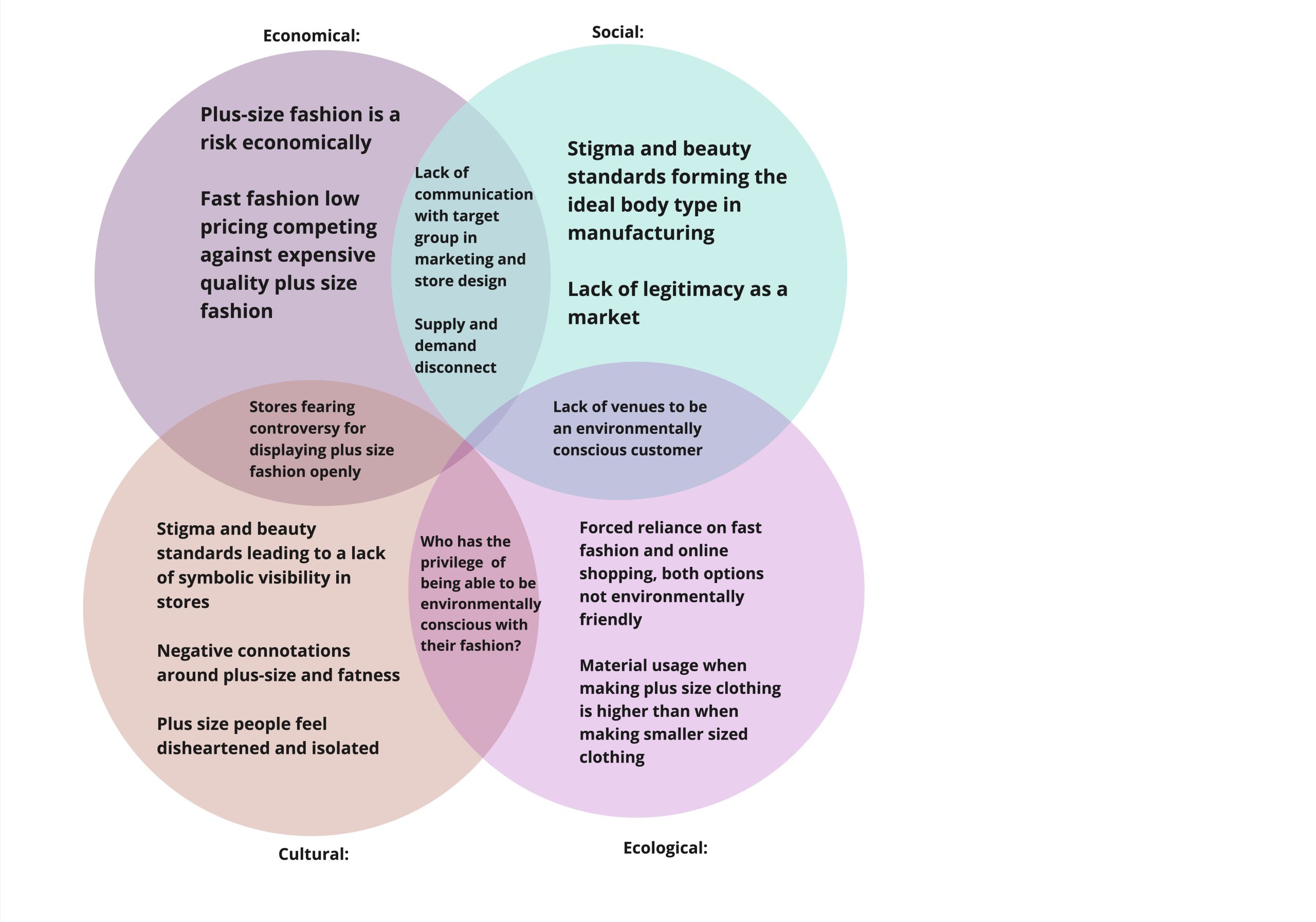
A few excerpts from the people who participated in my questionnaire. From the questionnaire I could see that there are many plus size people who feel disheartened by the current fashion market, saying that the difficulty of finding clothes in their size for affordable prices is difficult for them. Stores that do provide a good assortment of clothing become a huge source of trust, but with more stores ending the importing for their plus size collections there has been a sense of unease building up for many plus size people, that more businesses will follow suit.
What if?
As I began the second stage of my project, I reflected on the responses I had gotten from the questionnaire and how I should move forward accordingly. I decided that for a future that would be ideal for plus size people, they should be a part of the ideating process. My move was to turn this ideating process into a co-design session, using a mapping method I had created specifically for the occasion. In this map the co-designer is tasked with designing a store space that they think would be necessary for it to be considered part of an Ideal Fashion Future.


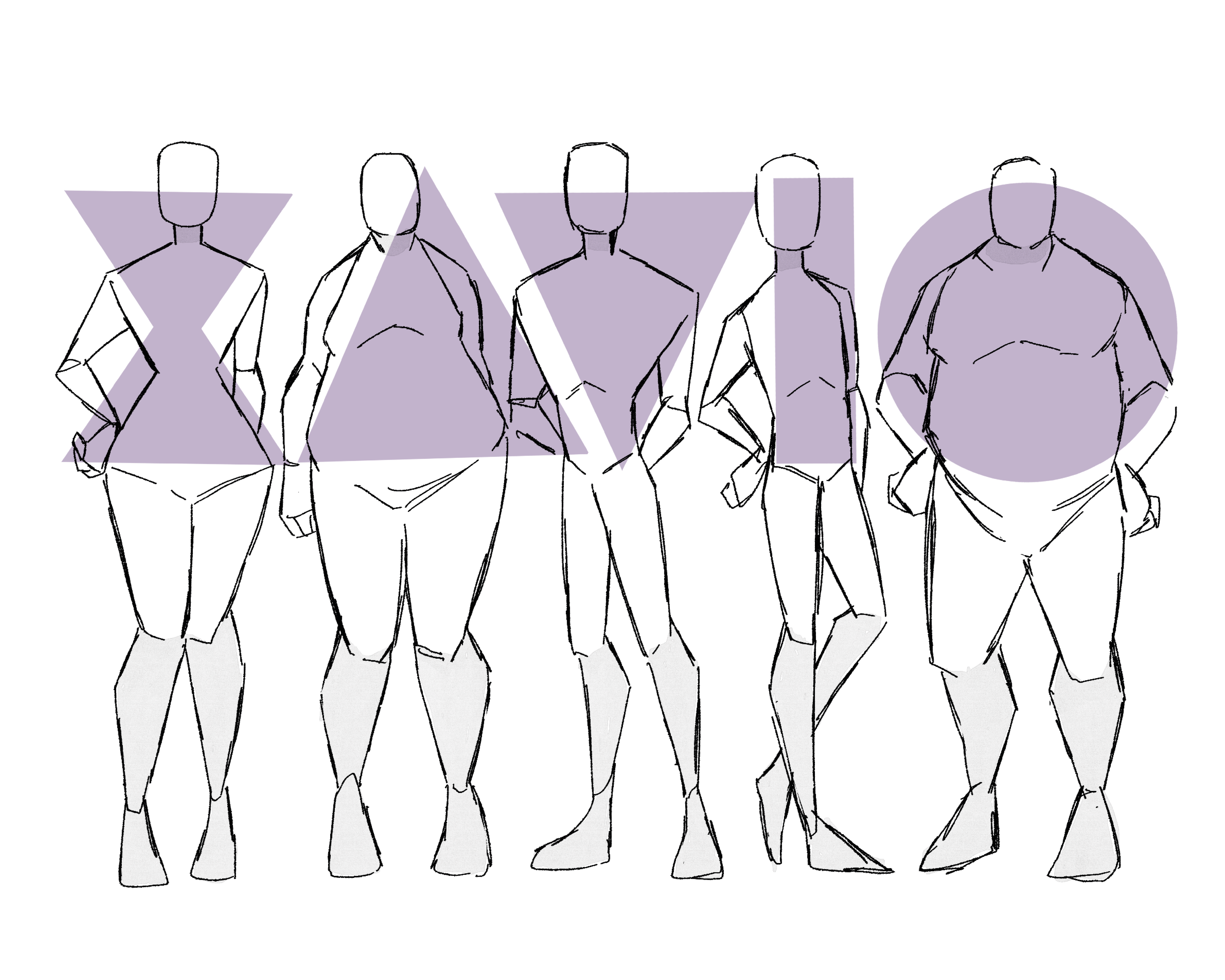
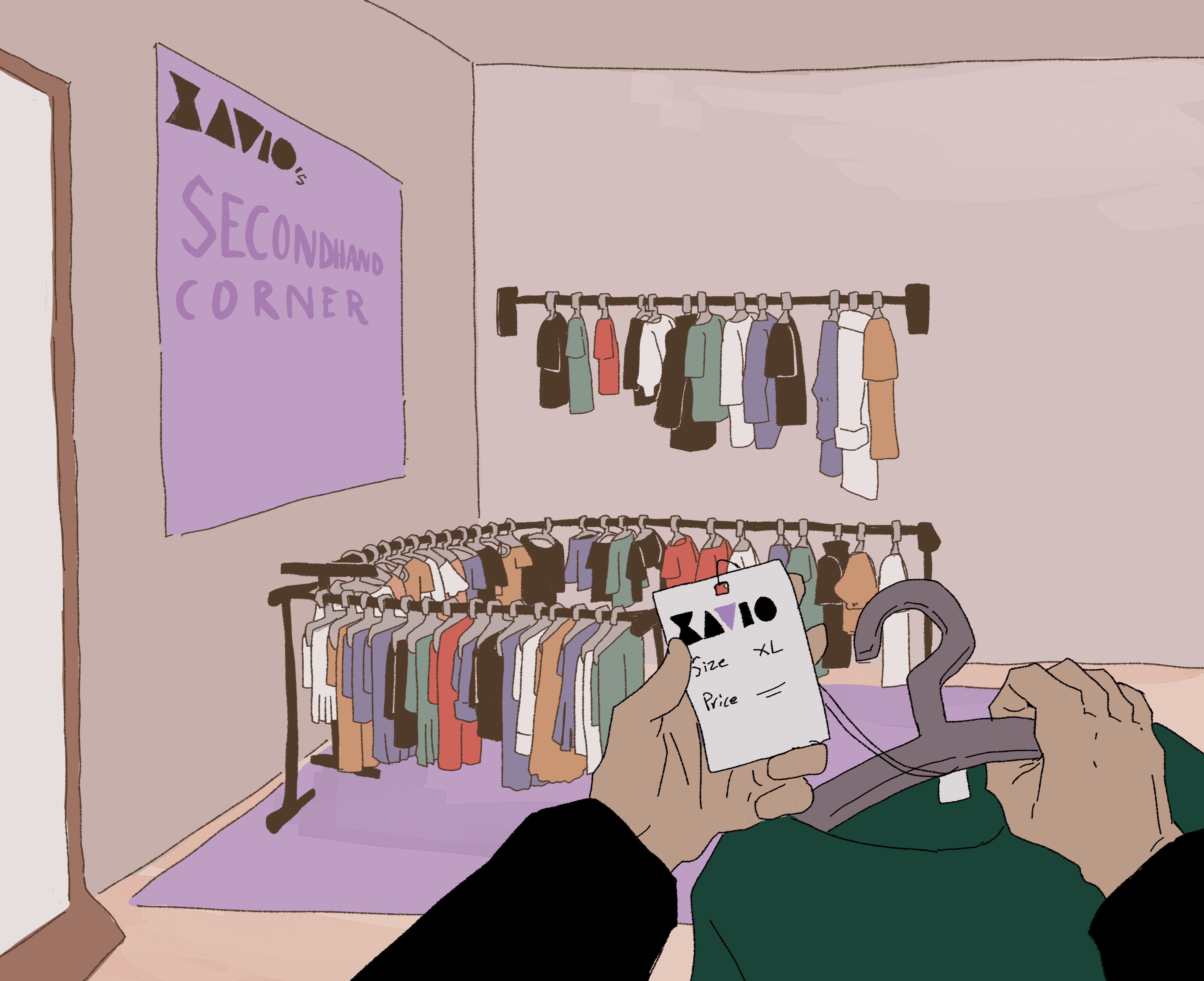
Using the results from my co-designers, I started sketching out what the final visualization of this space would look like for the exhibition. The result led to the store XAVIO, a store that focuses on providing clothes in not only different sizes, but different body types.
References
Dion, Delphine, and Béatrice Tachet. 2020. “Dynamics between Market Categories: A Study of the (in) Visibility of the plus-Size Fashion Market.” Recherche et Applications En Marketing (English Edition) 35 (1): 62–83.https://doi.org/10.1177/2051570719863648.