
TWO-SIDED INTEGRATION – Shifting Perceptions On Immigrant Integration
This Bachelor Thesis project aims to shed light on the importance of the two-sided integration of immigrants in Sweden. As Sweden moved from multicultural policies to civic integration, expectations from immigrants to integrate themselves into society have increased (Hudson, Sandberg & Sundström, 2022). However, social acceptance from the host country is also needed to facilitate immigrants’ integration into the cultural events of Sweden and society. The project “Two-Sided Integration, Shifting Perceptions On Immigrant Integration In Sweden” aims to discover immigrants’ challenges when meeting Swedes. Therefore, in this project, I am collaborating with Kompis Sverige to discover the issues they face while aiming to create these meetings between Swedes and Immigrants.
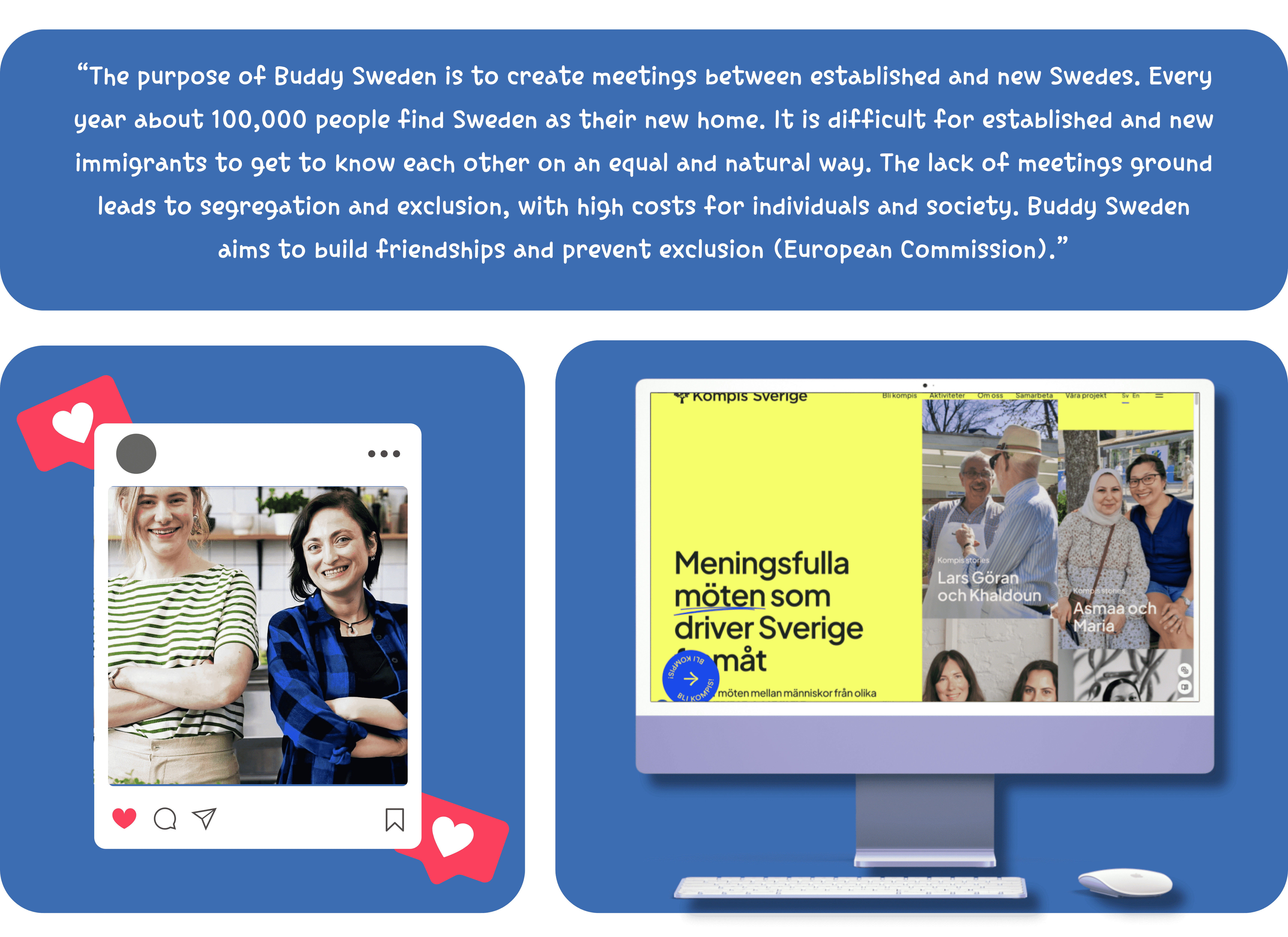
Integration into society is not a one-way process that solely depends on the immigrant’s participation in learning about the host culture but also requires an understanding and acceptance of the immigrant culture by the host society (Gsir, 2014). According to Süssmuth and Weidenfeld (2005), some people go so far as to say that “the most important factor of integration is acceptance, and that means maintaining a positive perception and appreciation of diversity.” (Gsir, 2014).

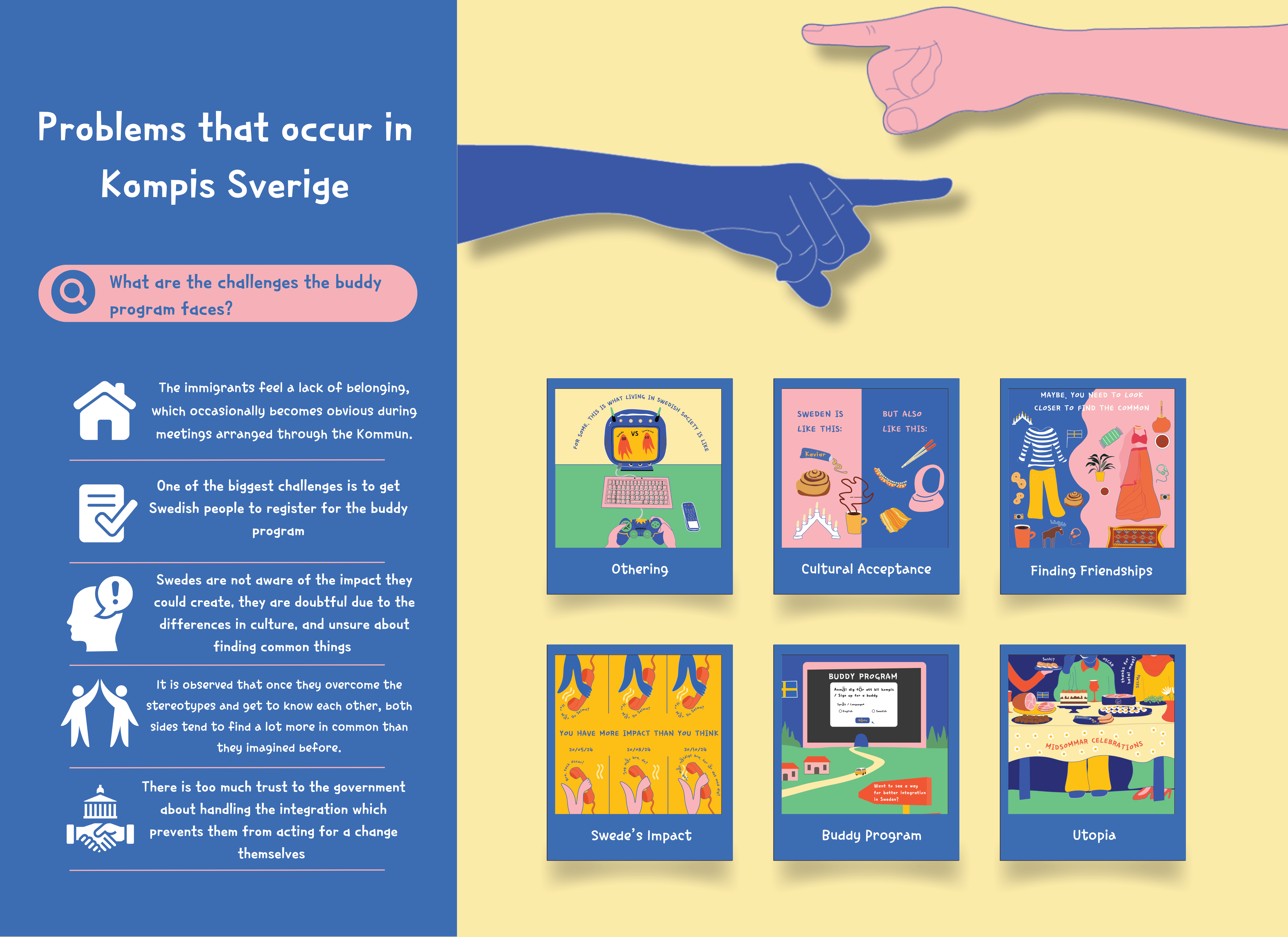
Meetings and encounters are crucial to integration; if this doesn’t work, there will likely be future problems like social isolation, alienation, and other challenges. Therefore, it is essential to facilitate meetings between both groups. However, first, we need to deal with the perceptions held to avoid stereotypes about each other. After asking Kompis Sverige important questions about their observations in the organization, I got a few key notes and structured how I put out my illustrations based on those notes.
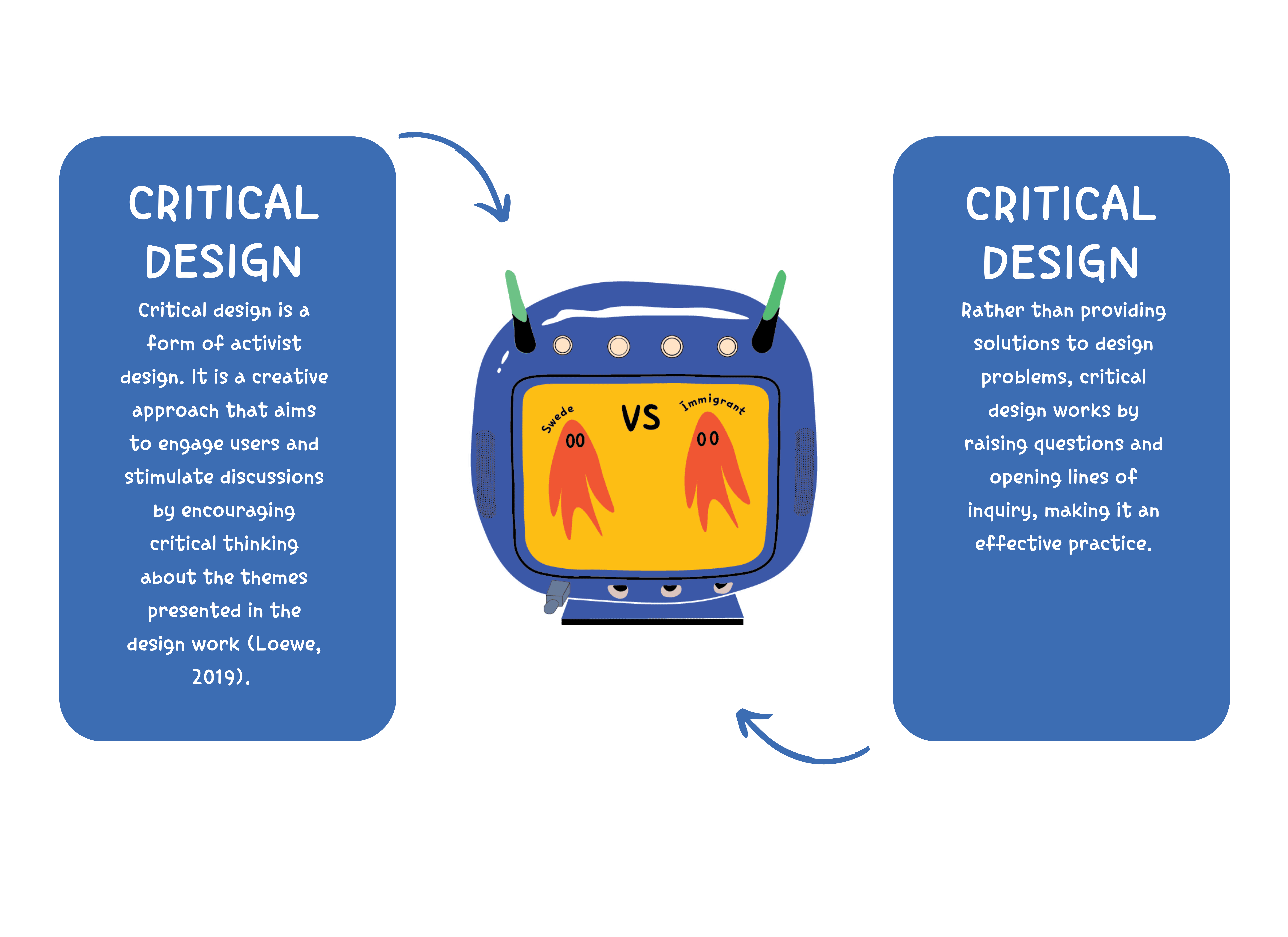
Critical Design
I am using design activism for this project to start a perception shift and debate ongoing issues regarding two-sided integration. I aim my designs to critically analyze problems, challenge ideas, and start conversations about two-sided integration in Sweden.
For this project, I used social media to share and contextualize my illustrations. The reason for this medium includes several facts:
- The lack of exploration of this topic in social media
- The target groups’ usage of social media
- The collaboration of the medium with other buddy programs
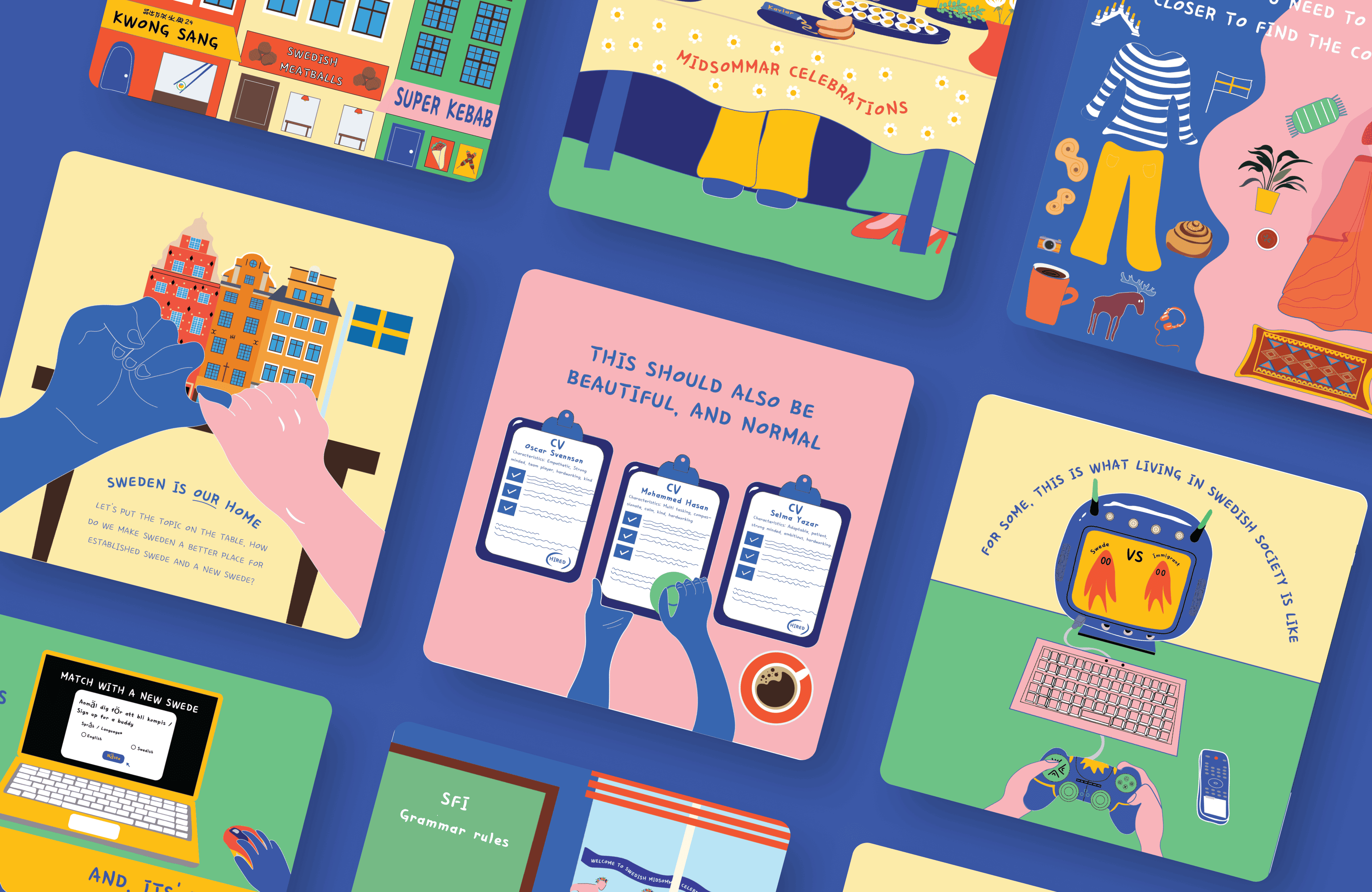
These illustrations will focus on different aspects of life and how creating social unity and sharing knowledge between Swedes and immigrants will contribute to an overall sense of home and community. These illustrations don’t necessarily have to be a linear process of telling a story, but more create illustrations that challenge stereotypes using critical design. I often use metaphors as a way to make the mentioned issues by Kompis Sverige more relatable while still keeping a friendly look. As mentioned earlier, the images are structured, and each step handles one specific issue mentioned by Kompis Sverige.
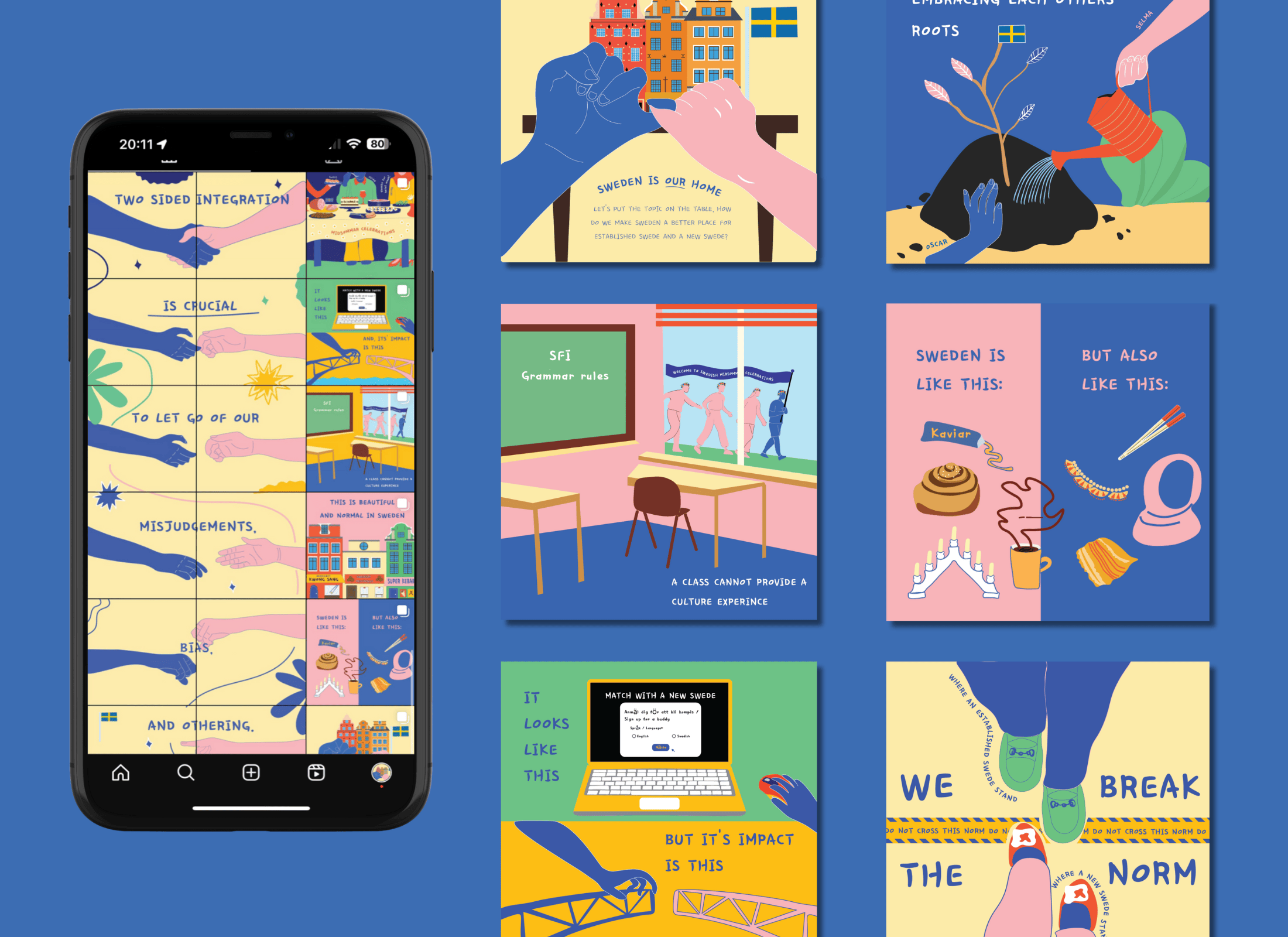
After gathering feedback from my target audience, I realized the relevance of this topic further, as it was mentioned often in the comments received. Working on this project allowed me to look from a Swede’s perspective as a foreigner in Sweden and get a deeper understanding of the underlying issues about immigrant integration. The most challenging part was to challenge how people think while still trying to keep a friendly look and avoid provocation. Ultimately, my images were believed to have found a middle ground based on Kompis Sverige’s feedback and the target audience.
References
Gsir, S. (2014). Social Interactions between Immigrants and Host Country Populations: A Country-of- Origin Perspective. San Domenico di Fiesole (FI): European University Institute: Robert Schuman Centre for Advanced Studies.
Hudson, C., Sandberg, L. and Sundström, K. (2022) ‘Integrating the immigrant the Swedish way? understandings of citizenship and integration in Swedish local civic integration projects’, Journal of Intercultural Studies, 44(4), pp. 553–569. doi:10.1080/07256868.2022.2107624.
Kompis Sverige – Buddy sweden (no date) European Website on Integration. Available at: https://migrant-integration.ec.europa.eu/integration-practice/kompis-sverige-buddy-sweden_en (Accessed: 27 May 2024).
Loewe, S. (2019). Toward a Critical Design Thinking: Propositions to Rewrite the Design Thinking Process. Dialectic, 2(2). doi:https://doi.org/10.3998/dialectic.14932326.0002.208
