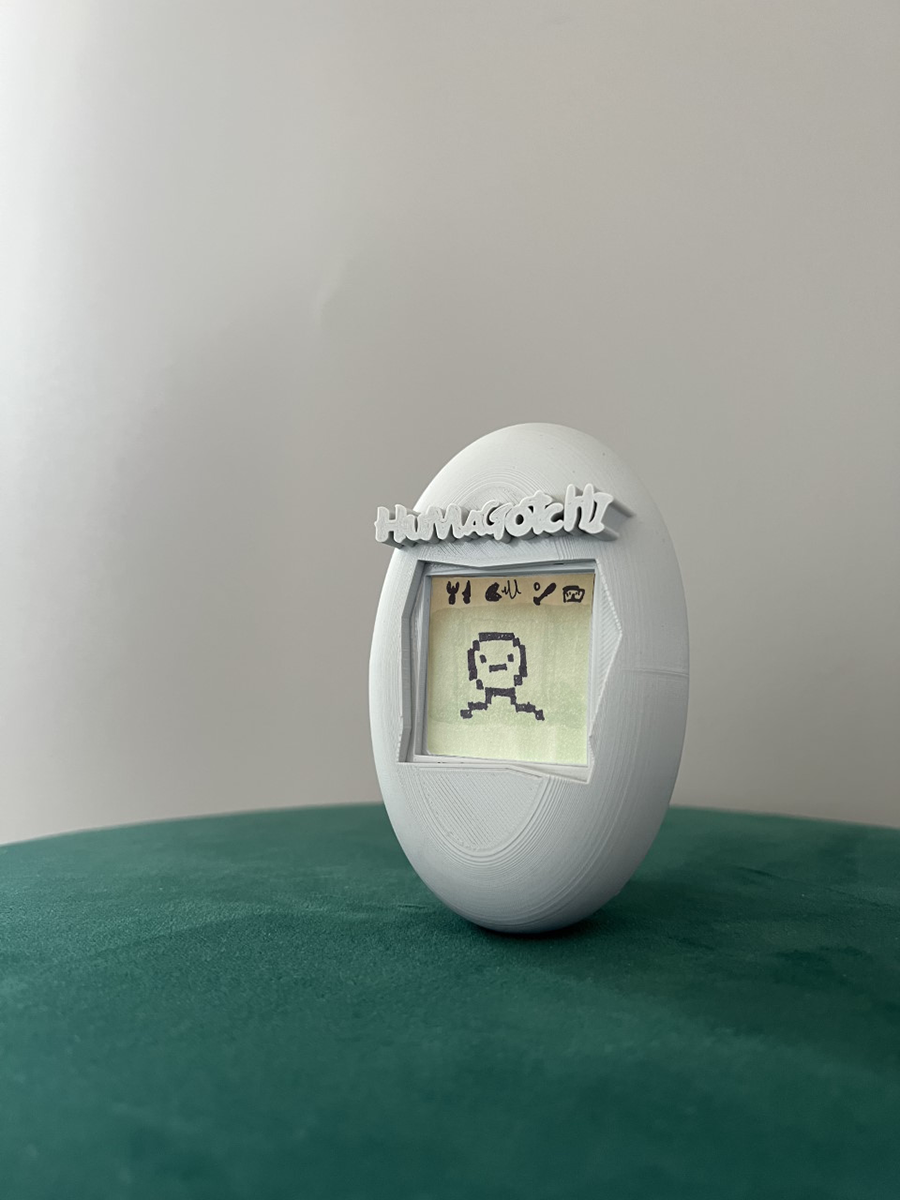
The Humagotchi – A critical design to speculate on whether we can reshape our fast paced habits and live presently with technology

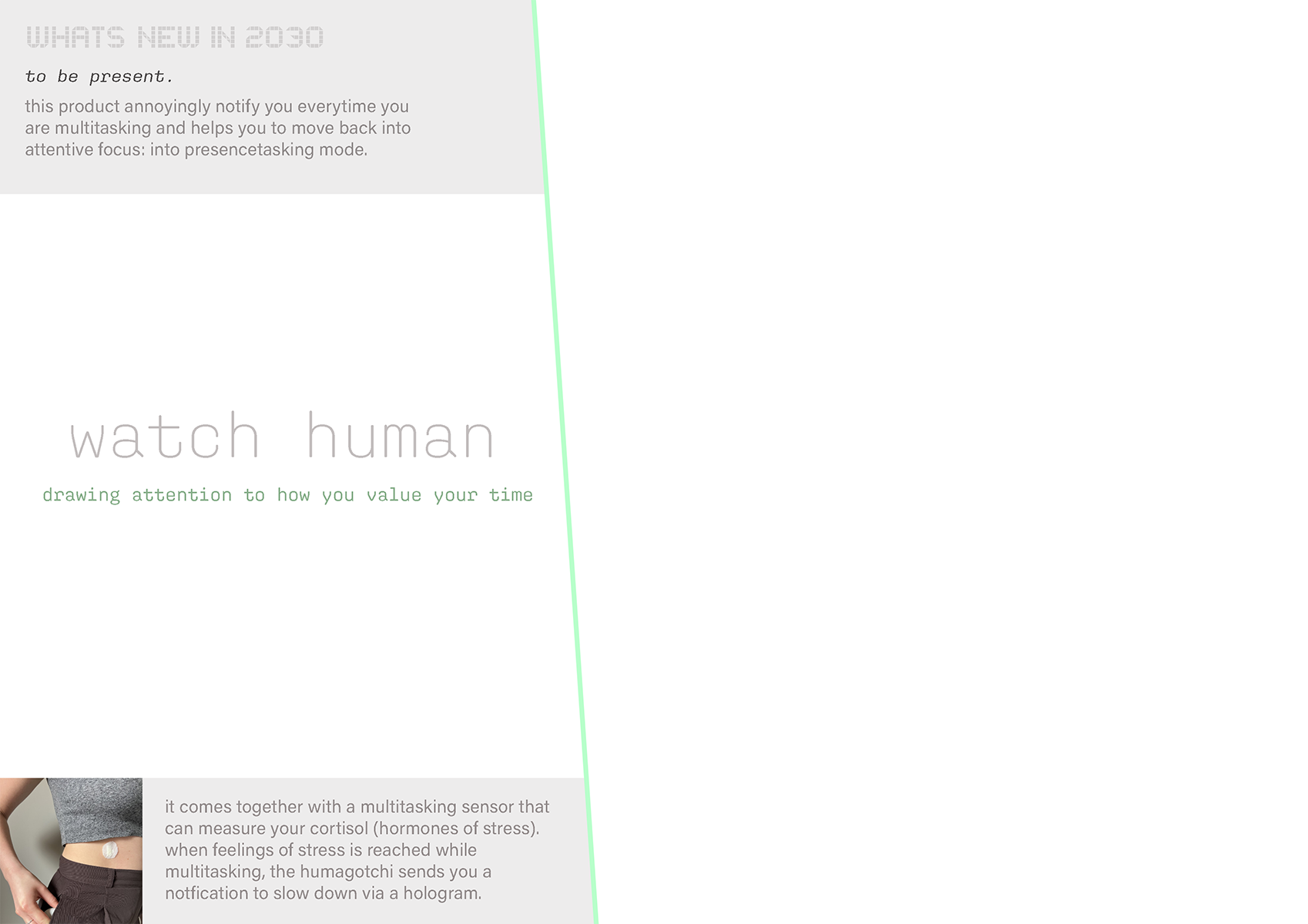
In the envisioned future, we are internally disconnected from our mind and can ironically only be drawn back to reality (presence) when using the Humagotchi. According to this speculation, we will live in a world where there is a life-or-death need to balance our relationship to technologic connectedness, otherwise the imbalance has an interconnected effect on our mental health. The Humagotchi is designed to be used by private individuals who are experiencing stress on a daily basis and to use this technical device as a reminder to slow down in the hustle of everyday life. When we are multitasking, overwhelmed, off tune with what is around us, we receive notifications about our fast-paced habits.
When would you need the Humagotchi?
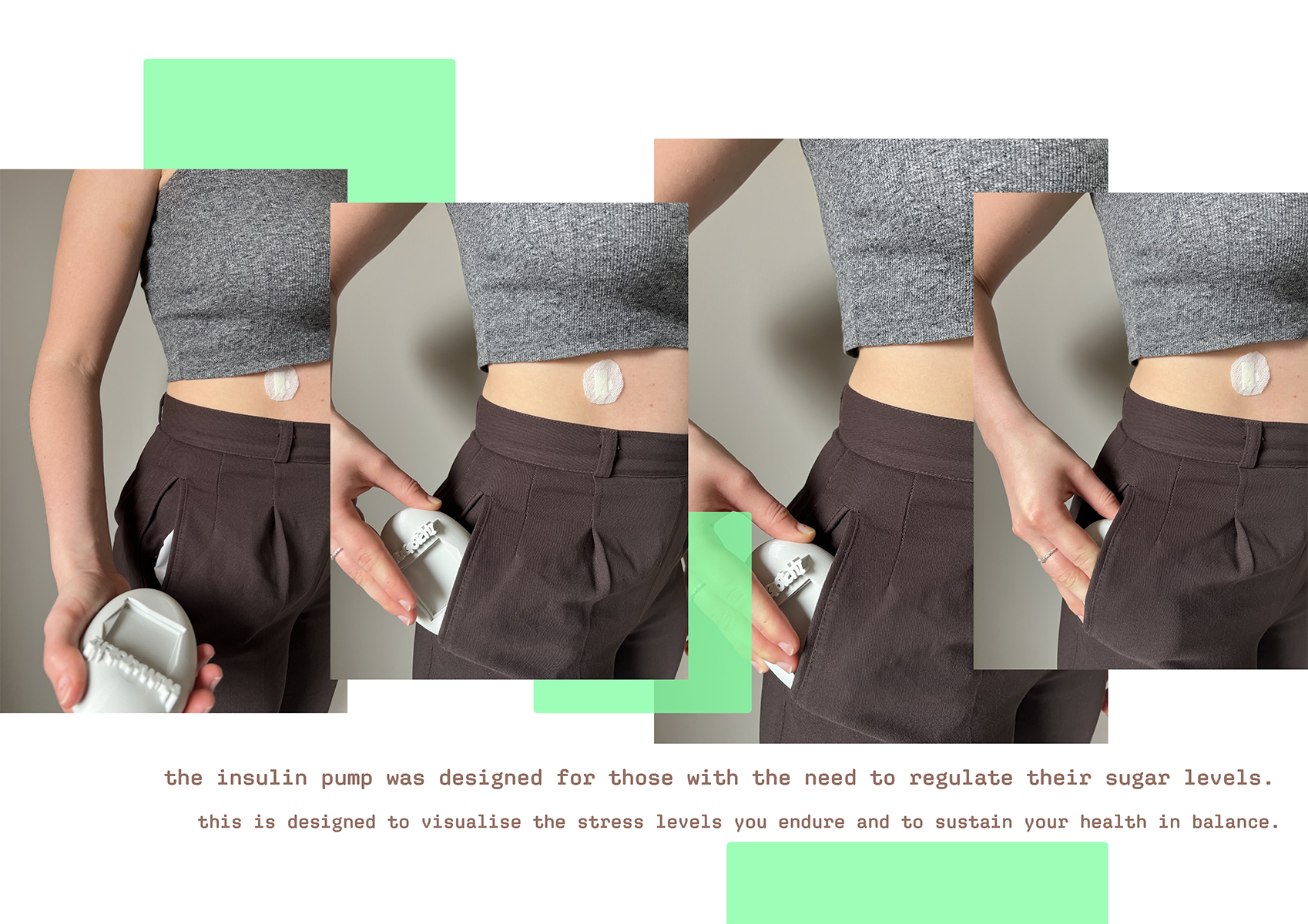
Can the Humagotchi make us live presently? Or is the Humagotchi an absurd and impractical situation, where the product is only a bandaid, another technological effort of ‘solving’ human problems?
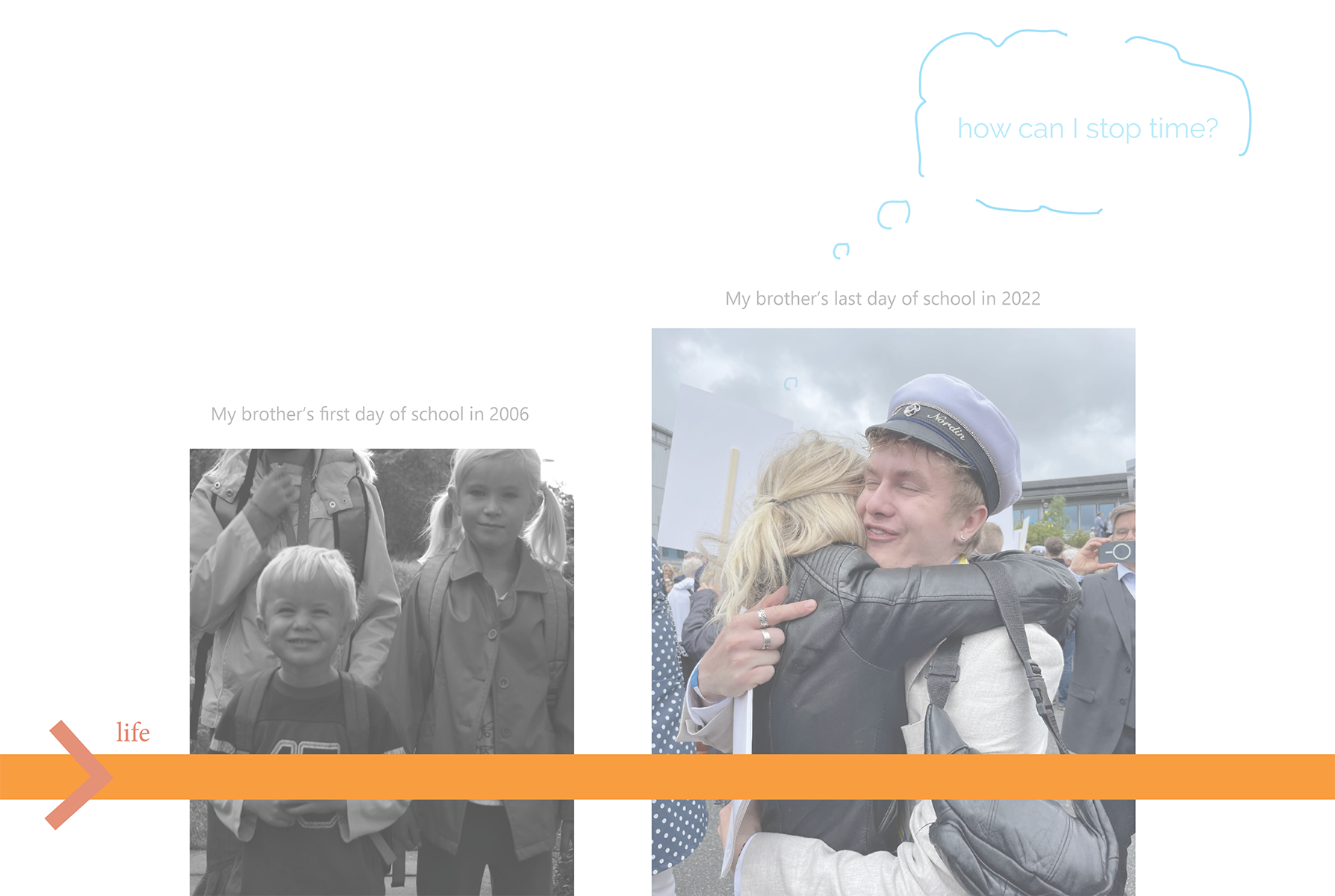
The Humagotchi is a speculative product situated in the future to bring reflection over today’s relationship with technology and the fast-paced culture of ‘doing´and being efficient. The Humagotchi interacts with Generation Z, by nostalgically envisioning a new type of Tamagotchi (which was a popular game in the 90’s) when we cared for something virtual over the human. It is presented as a campaign to reflect over the social structures of speed, materialism and consumption while bringing conversation to valuing the body and mind. A product not imagined to be sold, but rather give discussion to how the technological environment has agency to shape common habits and how these can consequently affect mental health and the general public.
Generation Z
The Media Council of the Swedish state has reported through research that youths’ mental health (Generation Z) have worsened by double compared to previous generations (Nutley and Thorell 2021). A population that, compared to previous generations, learnt to live, explore, be informed, updated through technologic connections.

How can we move away from cognitive overload and retrieve the value in living more attentively through our actions?
What if?
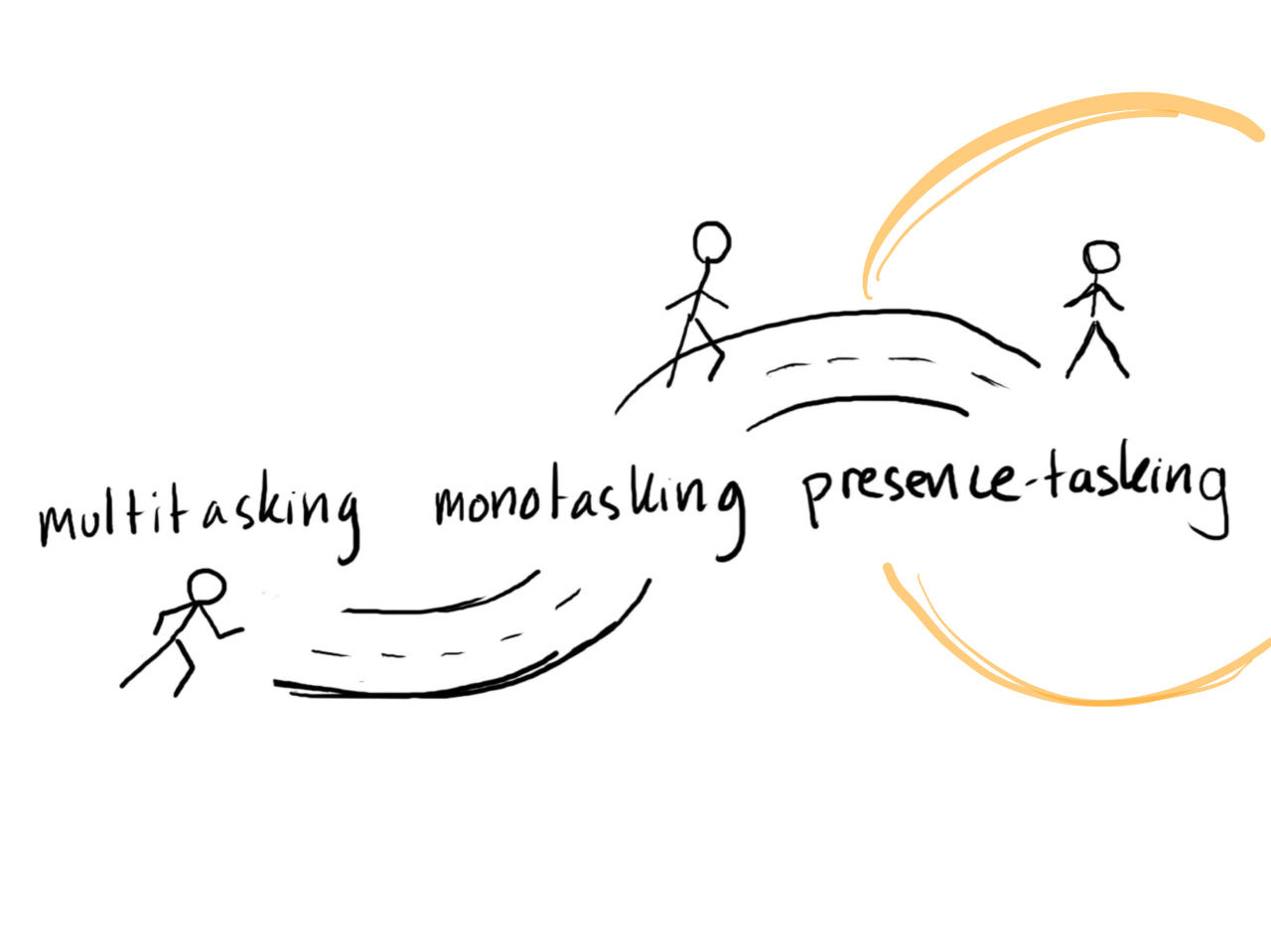
Slow, speculative and ontological design shaped the process to formulate a critical product that reforms the current culture of multitasking through languaging the concept of presencetasking.
Presencetasking: “A state of mind when you are attentive to the environment around you and in close contact with your feelings. Situated without any distractions (especially technologic disturbances) and having the feeling of being aware. An example of presencetasking can be when your gaze is fixed to one thing in the room or when you are in some kind of contentment of what is now.

Being
At the core of this project, well-being is in the main focus to contradict the consequences of efficiency and instead value the concepts of presence, non-action and slow-living. Humagotchi imposes an interpretation of the problem space of the productivity culture and technological connectedness, by encouraging a discussion of what the urgent issues are within this context in the present and potential future. It further suggests a transition from valuing fast knowledge to slow on the systematic level and indicating the important values in sustaining well-being from the individual to a shared established mindset of the paradigmatic collective.
References
Text:
Nutley, Sissela, and Lisa Thorell. n.d. “Digitala medier och psykisk ohälsa hos barn och ungdomar: En forskningsöversikt.” SM_Digitala_Medier_Psykisk_Ohalsa_v4_RGB.pdf (attention-stockholm.se). Accessed 31 January 2023
Picture: (Manipulated by drawing)
bram_stokers_acura. 2020. “Kids in a School Bus – 1960s.” Reddit Post. R/OldSchoolCool. www.reddit.com/r/OldSchoolCool/comments/kgne3o/kids_in_a_school_bus_1960s/
