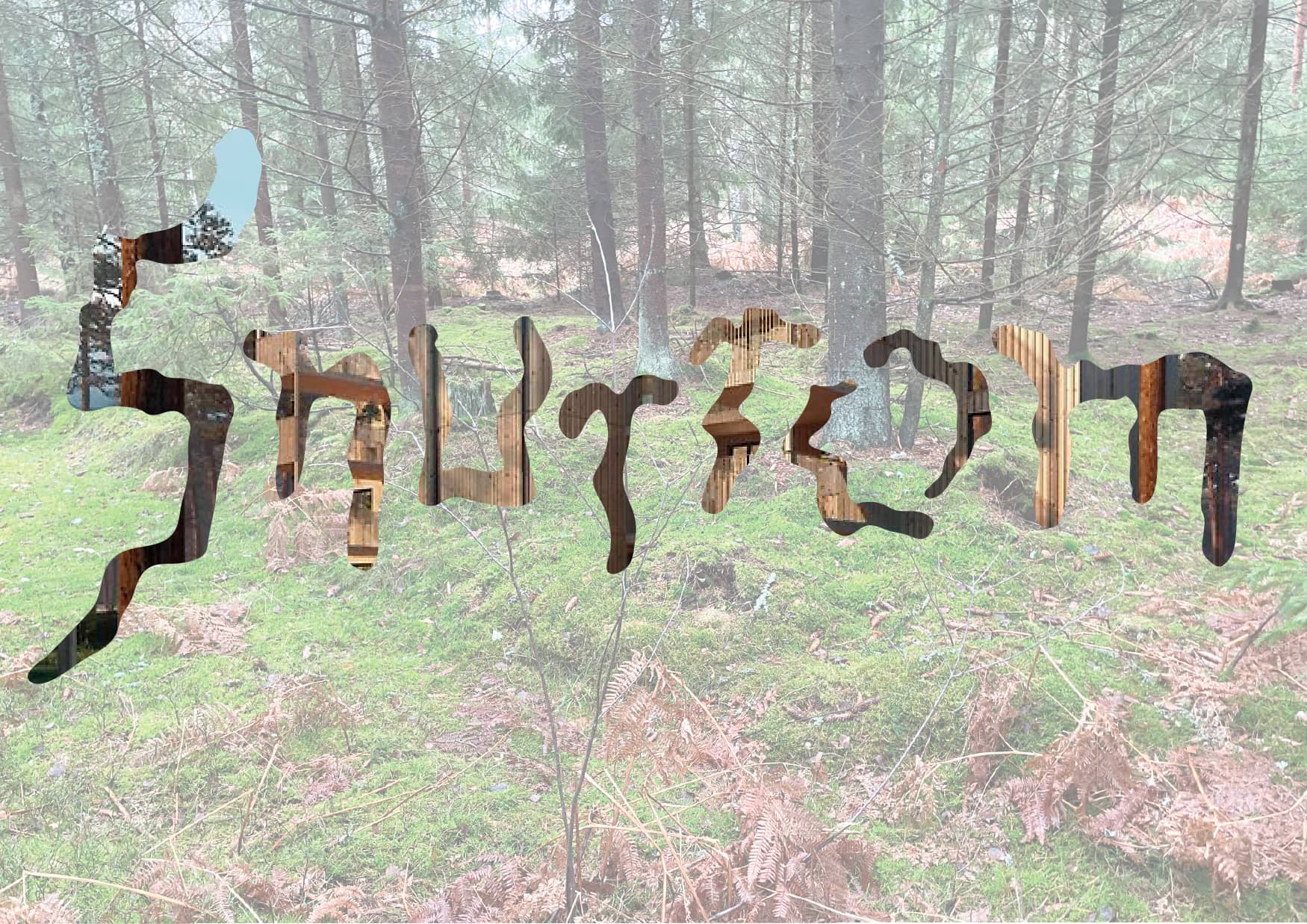
SNURROM FOREST – An experience to incorporate other species’ perspectives in our policy making
SNURROM FOREST is a design project that explores how I can contribute through design to the discussion about Snurrom’s forest future with a multispecies, non-human, perspective. With this aim I hold conversations with the Skoggrup (forest group) of Kalmar’s Natursyddsföreningen which provided me insights for this project. The outcome is the design of a sensorial experience and its toolkit, that guides the interaction of humans with the forest of Snurrom from other species points of view, aiming for more empathy towards non-human species.
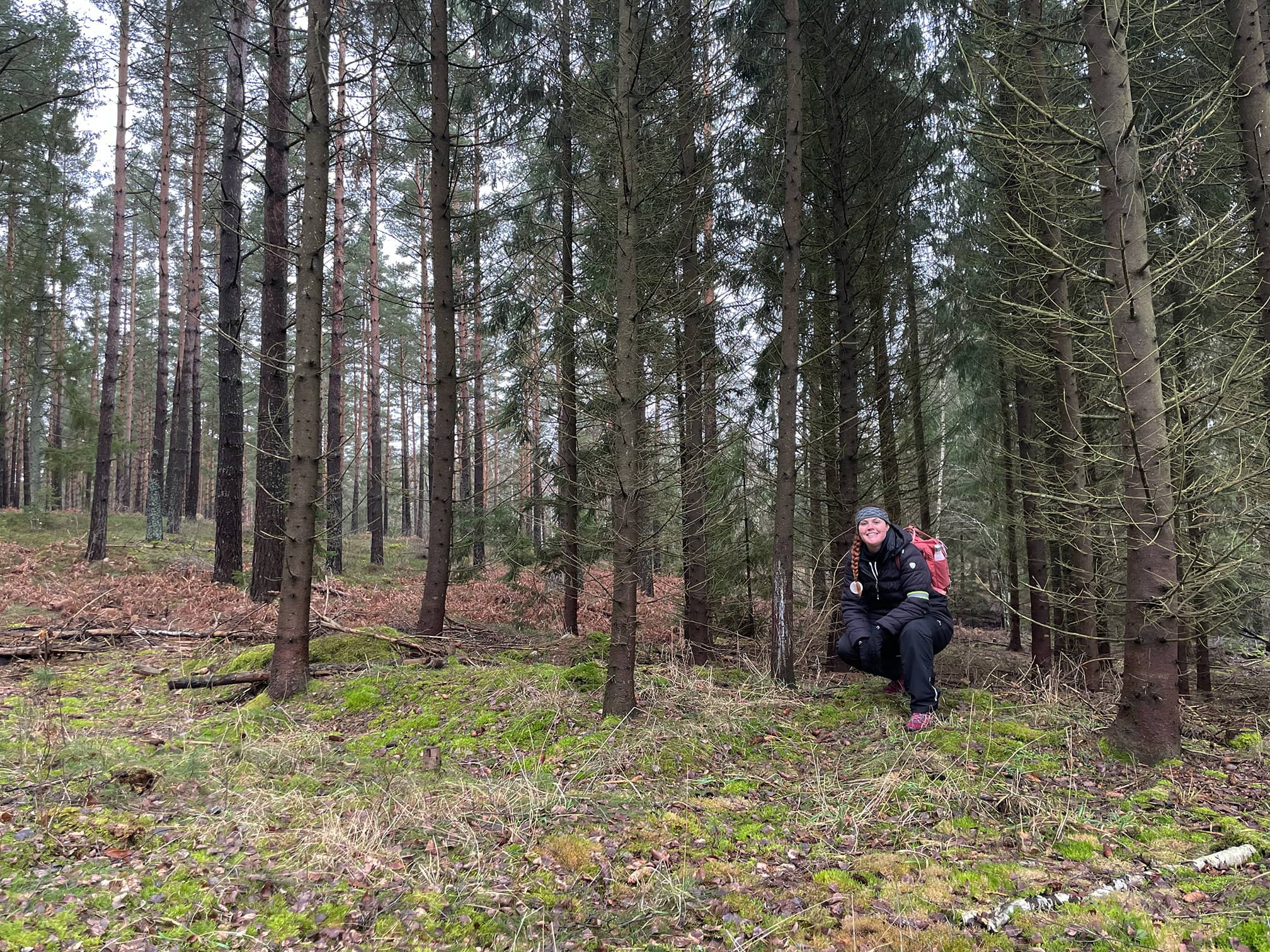
The world is currently dealing with the problem of Climate Change and the environmental crisis. Even in a country as famous for their forest as Sweden, the protection of the forest is not being guaranteed. I understand the frustration that the civil population is experiencing when certain forest areas are being intervene with purposes of real estate. This is the case of the neighborhood of Snurrom, the northern part of Kalmar, in the region of Småland. The authorities’ decision has been quite controversial and seeds the doubts about the political decisions behind the uses of soil, urban design, and policy planning; specially when the project itself has been promoted as top sustainable viable city.
The discussion about Snurrom is not only a subject of democratic participation in decision making but also how it reflects our values as humans who must solve the problem on how to coexist with other species. This project enriches the discussion about the future of specific ecosystems (like the Snurrom Forest) by moving away from only human-centered perspective.
“Re-thinking human-environment relationships, in terms of, for example, decentering the human subject and reconceptualizing non-human agency in questions of urban development and planning.” (Sachs Olsen, 2022)

But if we are aiming for changing behaviors then the first step is to change our mindset. This project is based on the idea of exploring different ways to create experiences that would allow the development of a multispecies perspective, co creating with the territory, exploring through sensorial experiences, storytelling and role playing.
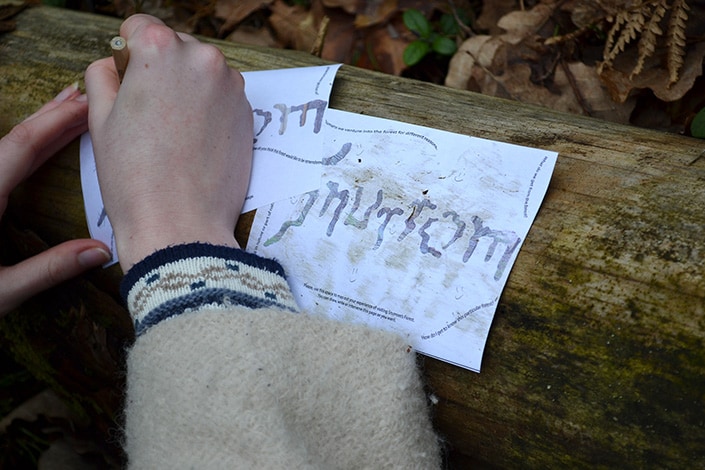


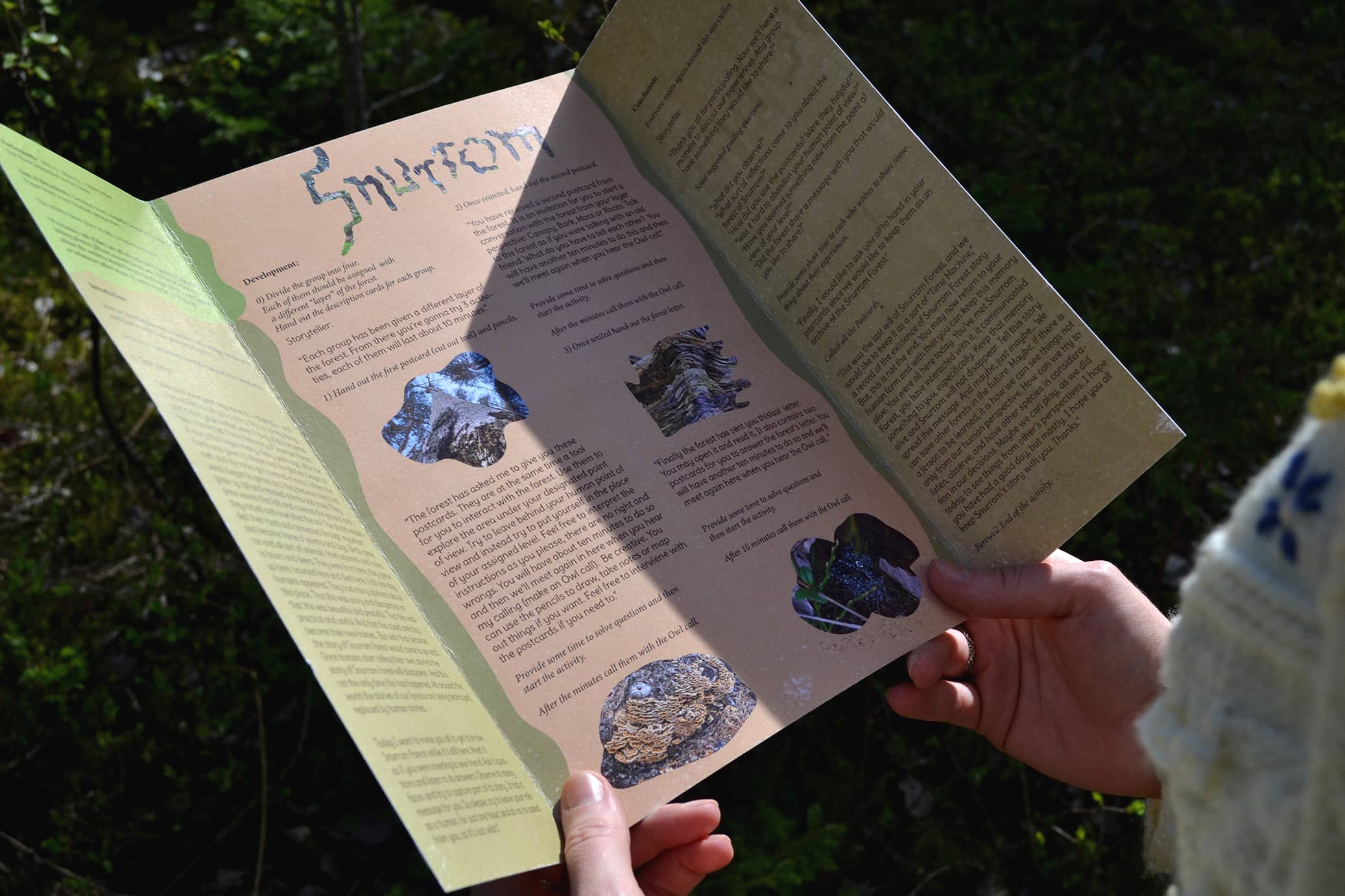
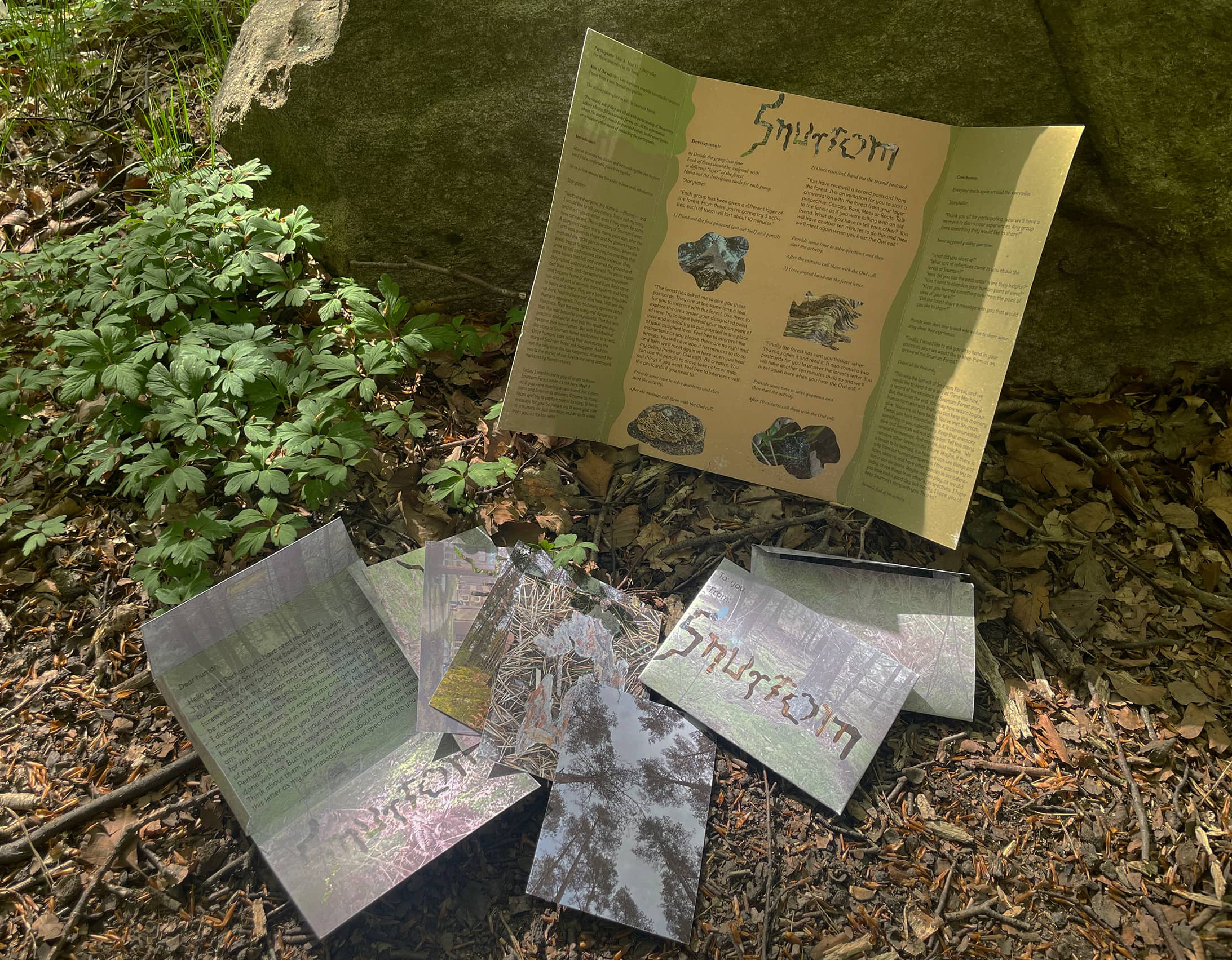
The toolkit contains an instruction booklet with a script for the storyteller guiding the activity and a set of postcards with different instructions for the participants to engage with the forest using all their senses, divided under four different layers of the forest: the canopy, the bark, the moss, and the roots. The visual language was inspired by the colors and shapes of nature itself.


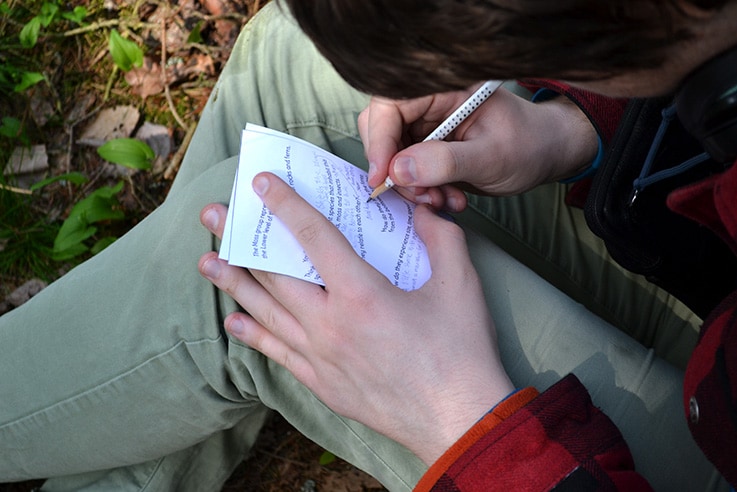
We tested the activity with me acting as the storyteller and having members of the Skoggrup (forest group) as participants. The outcome was an interesting discussion about our role as humans when intervening natural ecosystems and how can we propitiate different ways of connecting with the natural spaces. The conclusion was that we only can protect what we know, what we care and thus we are in need of creating these emotional bonds with the areas we want to preserve.

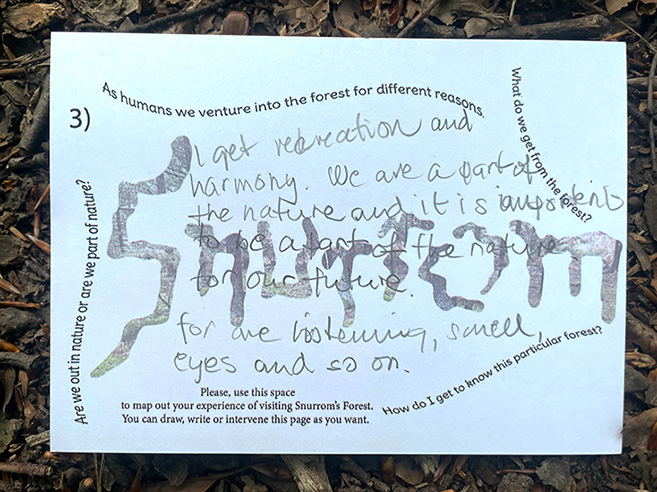
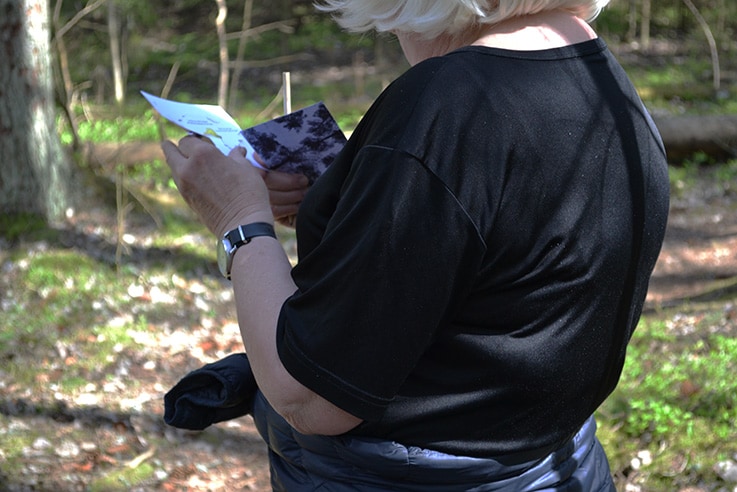
All the postcards of the activity had been collected to create a Snurrom Archive, a different one, not of numbers and measures, but one of memories, experiences, and emotions, showing this forest intrinsic value. A statement that Snurrom Forest once existed and this was its last message to us, humans. This archive has also been digitalized so anyone from the Skoggrup (forest group) can access to it and eventually use it when dealing with similar projects in the future.
References:
Sachs Olsen, C. “Co-Creation Beyond Humans: The Arts of Multispecies Placemaking”
Urban planning, Volume 7. Issue 3, Pages 315–35. Norwegian Institute for Urban and Regional Research, Oslo Metropolitan University, Norway, 2022.
