Reimagining Bäckparken – A Community-Centric Approach to Playground Design in Alstermo, Sweden
Engaging the community in meaningful ways is essential for creating spaces that truly serve their needs. This project aims to discover an effective participatory design method that maximizes user involvement in the redesign of a local playground in Alstermo. By actively involving the children from the village—the primary users of the playground.
What is now ?
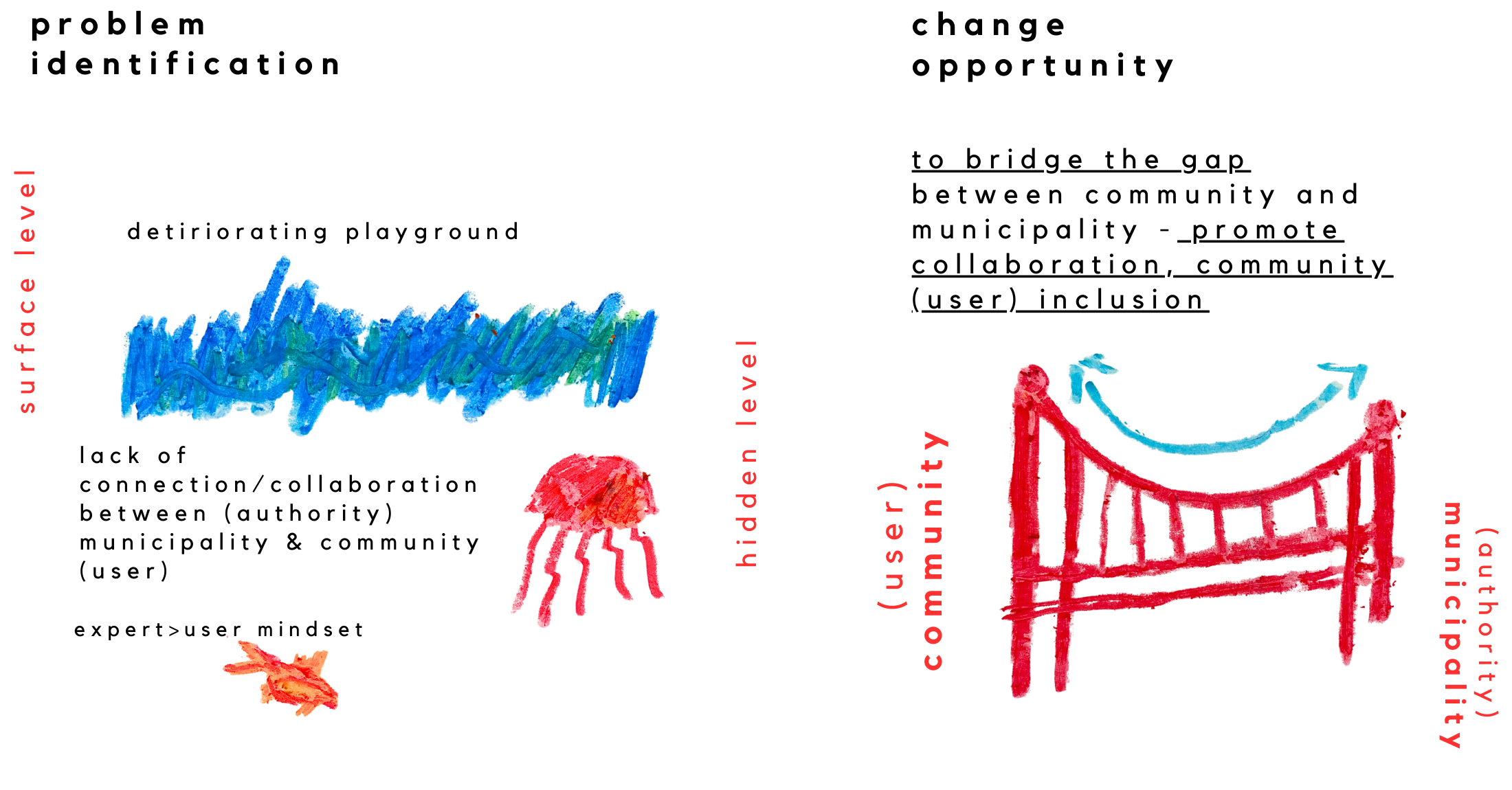
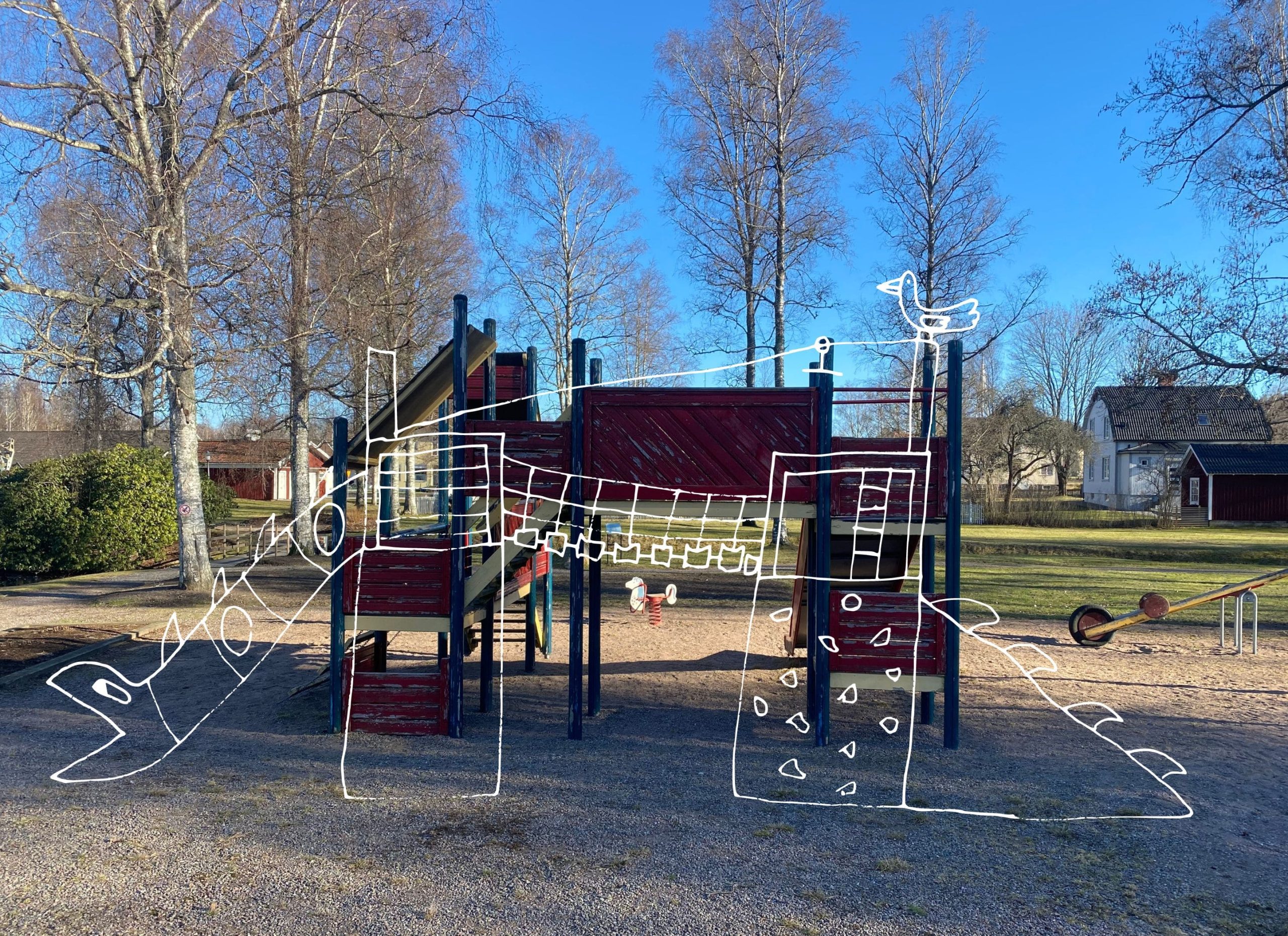
The local playground in Bäckparken is deteriorating and in poor condition. It needs to be redesigned. The municipality plans to purchase equipment from a catalog, without necessarily taking the user’s perspective into account. As a designer, I identified a problem – lack of collaboration between the municipal authority and the user (the community – children).
Why is participation important ?
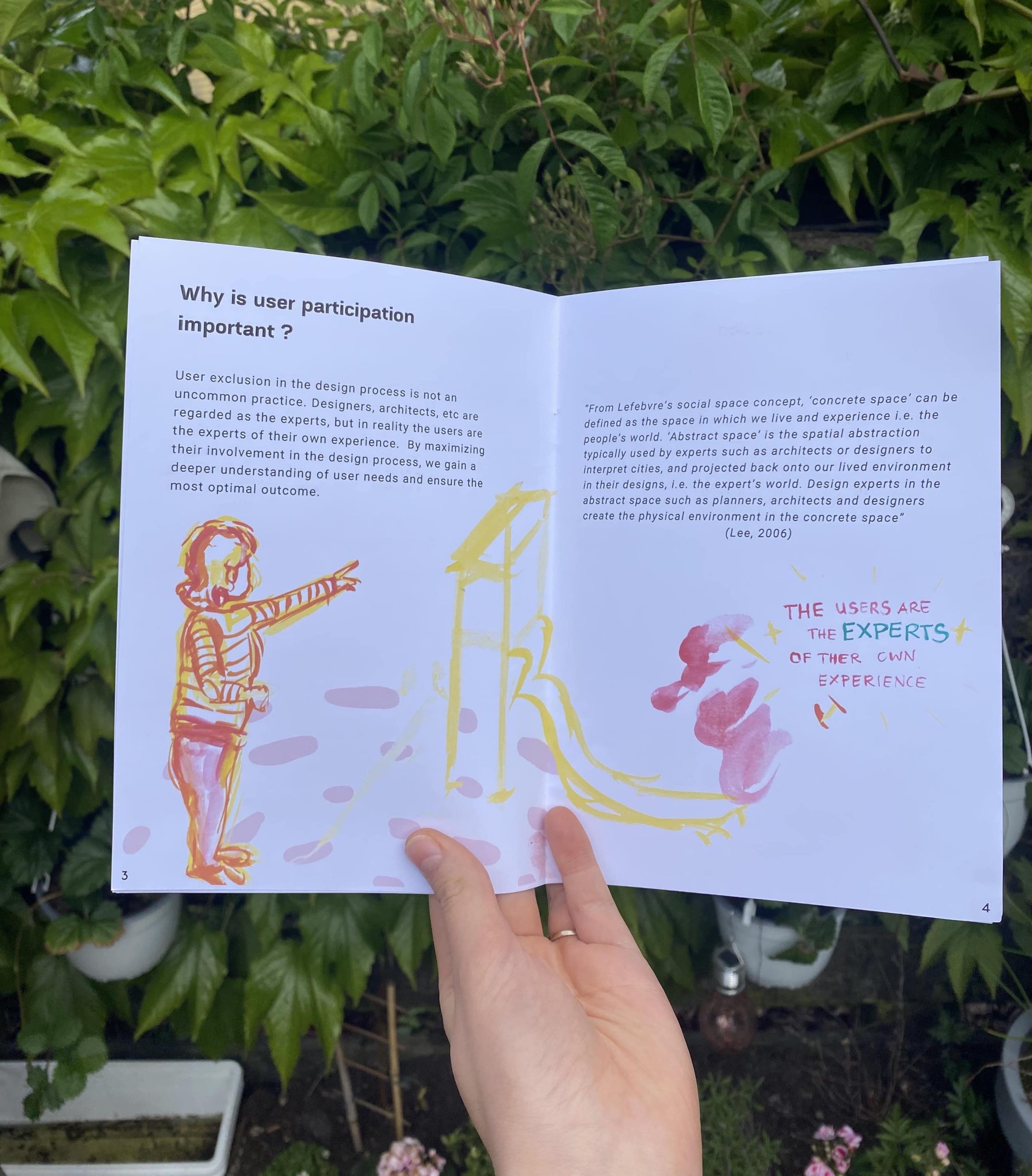
User exclusion in the design process is not an uncommon practice. Designers, architects, etc. are regarded as experts, but in reality the users are the experts of their own experience. By maximizing their involvement in the design process, we gain a deeper understanding of user needs and ensure the most optimal outcome. With this project, I aim to challenge this uneven user – expert relationship through using participatory design methods.

“Playground design has been accused of reflecting mainly an adult perspective on children, being adapted to adult concerns, fears and wishes to protect and watch over children, which has even been argued as destroying children’s play possibilities .” (Jansson, 2009)
What happens when a user becomes an expert ?
Workshop
I designed a “playground design”, that was hosted at the local school in collaboration with the teachers. The students from grade 4 and 5 were asked to roleplay as designers. After an introduction and inspiration session, the participants brainstormed individually, and then designed their dream playground in groups. After the sketching session, the groups presented their designs to the class.

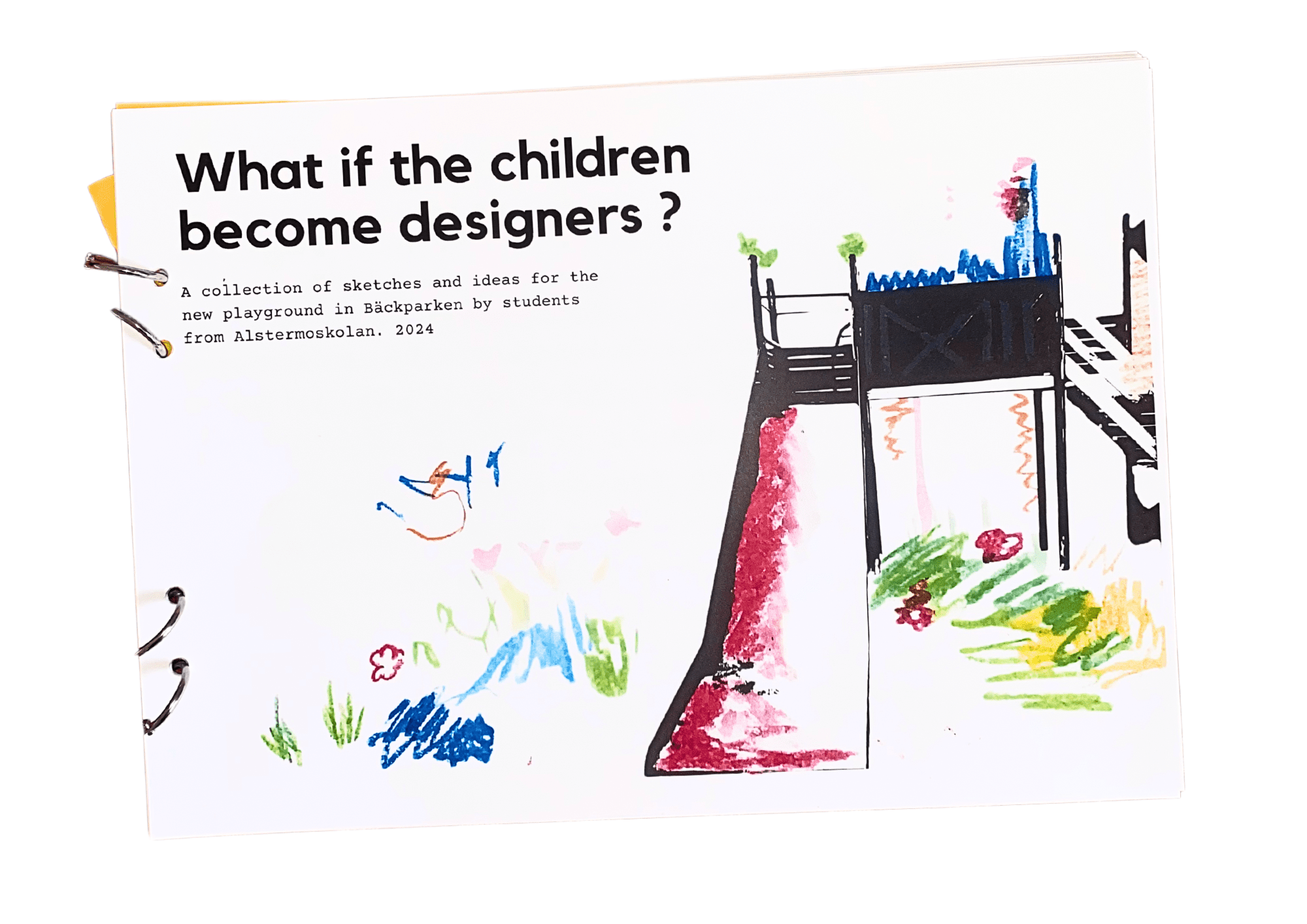


The workshop resulted in a variety of sketches and visions for the new playground, which provides a user perspective. The sketches were then synthesized into a book as a form of designerly documentation. Important to mention is that the book also includes sketches and ideas of students from other grades that didn’t participate in the workshop. The teachers individually gathered the documentation. This action was made in order to maximize the participation even more and strengthen the validity.
The book includes all the sketches, as well as a summary/synthesis of interesting insights, ideas and what equipment was the most desired among children. This documentation is a valuable source of user perspective and aims to act as a lead for the municipal authority for when they proceed with redoing the playground in Bäckparken.
The outcome: Guide for user participation in playground design – how to collaborate with the user?
As my seed of change, I created a guide for user participation in playground design. The guide aims to inspire the municipal authority to further collaborate with the user when redesigning other playgrounds within the municipality, but most importantly to facilitate this collaboration. The guide includes a step-by-step guide on how to collaborate and conduct the “playground design” workshop.


References
Jansson, M. (2009) Management and Use of Public Outdoor Playgrounds, 38.
Woolley, H. (2008) Watch This Space! Designing for Children’s Play in Public Open Spaces. Geography Compass, 2(2), 495–512.
Wardle, F. (1990) Are we taking play out of playgrounds? Day care and early education, fall 1990, 30-34.