Queer tv for queers, not for money – A look into what is missing from current queer representation in western movies and tv, why it could be missing, and what you can do about it
This project is centered around queer representation in tv and film and how it’s been affected by the capitalist system of creating it, guided by the project question “How can I use visual communication to work towards a tv and film industry that values authenticity in representing queerness rather than the monetary gain it can lose/give them?”. It aims to use fanzines and posters to communicate which specific aspects of queer representation are missing, analyze why that is, and what you as a consumer can do to help in the current day.

Professors Juan-José Sánchez-Soriano and Leonarda García-Jiménez describe in their research paper The media construction of LGBT+ characters in Hollywood blockbuster movies. The use of pinkwashing and queerbaiting(31/07/2020), how producers of major Hollywood films use marketing strategies such as queerbaiting and pinkwashing in order to gain money from queer audiences without having to explicitly mention queerness or stray away from heteronormative storytelling. Sánchez-Soriano and García-Jiménez express how these marketing strategies rely on implying queer representation through the writing and/or press interviews, only to never deliver, or deliver it in a 5-second or background clip that can easily be cut out for other screenings that would object to it in order to make the most profit as possible.
As well as this, Emma Nordin also writes in her master’s thesis From Queer Reading to Queerbaiting: The battle over the polysemic text and the power of hermeneutics (05/07/2015) how the spread of fan communities on the internet in combination with the term queerbaiting has enabled further discussions amongst fans which in turn can be used for fan activism that demands authentic representations of queerness.
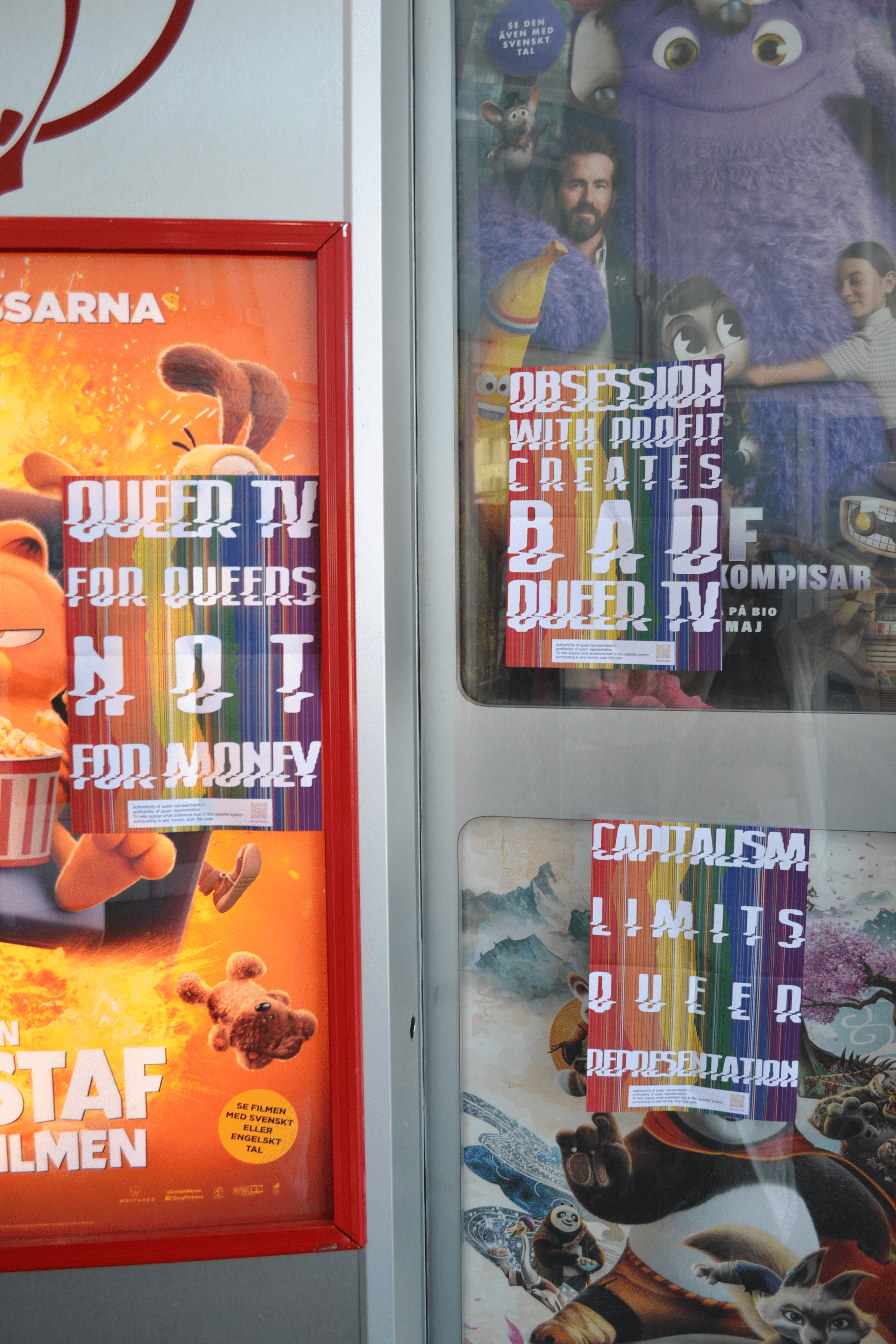
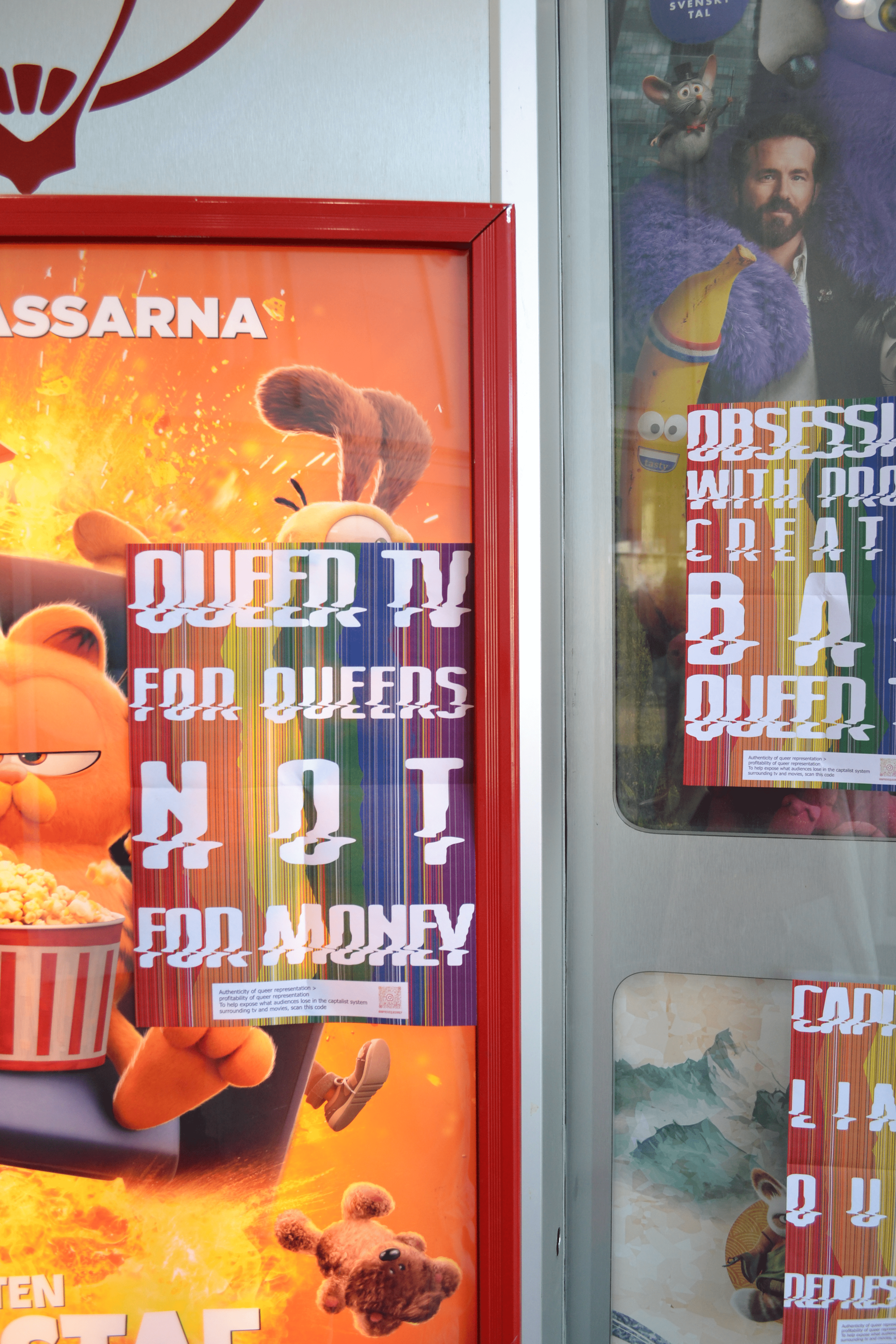
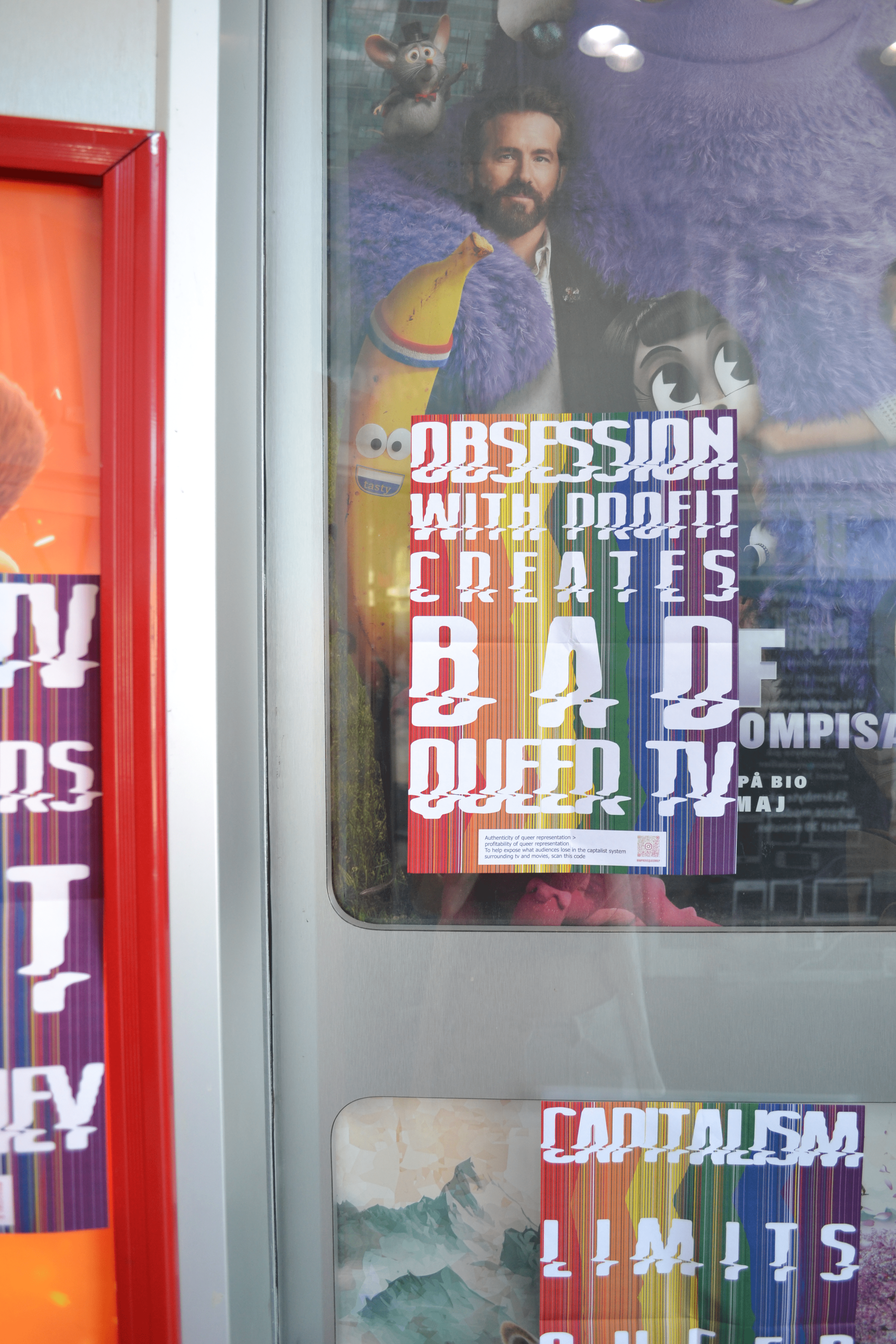
Both of these ideas drove my thoughts forward from simple observations and critiques to trying to think of escapes or solutions to this problem instead. It then led me to the opinion that kept driving my project, which is that while it may be tempting for audiences to instead turn to more indie queer representation, I concluded that it still exists in the same market, just working around it, and that we instead should direct our discussions and activism into improving the market as a whole and turning it away from being solely for monetary gain, which would in turn improve the authenticity of queer tv and film as a result.
In regards to format I chose to use the medium of the fanzine, since I do find it quite interesting that by nature fan writing and content is one of the few, if not the only, form of queer representation that cannot garner revenue and is therefore purely created by passion, and could also express what consumers wanted to be changed in current queer representation. As well as this, I also included posters within the zine in order to not only provide information and analysis but also inspire action and change. The visual language I used was inspired by the image of a tv static screen, something that disrupts the “normal” order of television, which I then combined with the rainbow pride flag to generate visuals that simultaneously catch your eye while immediately clueing the viewer into the theme of queerness in cinema and tv.
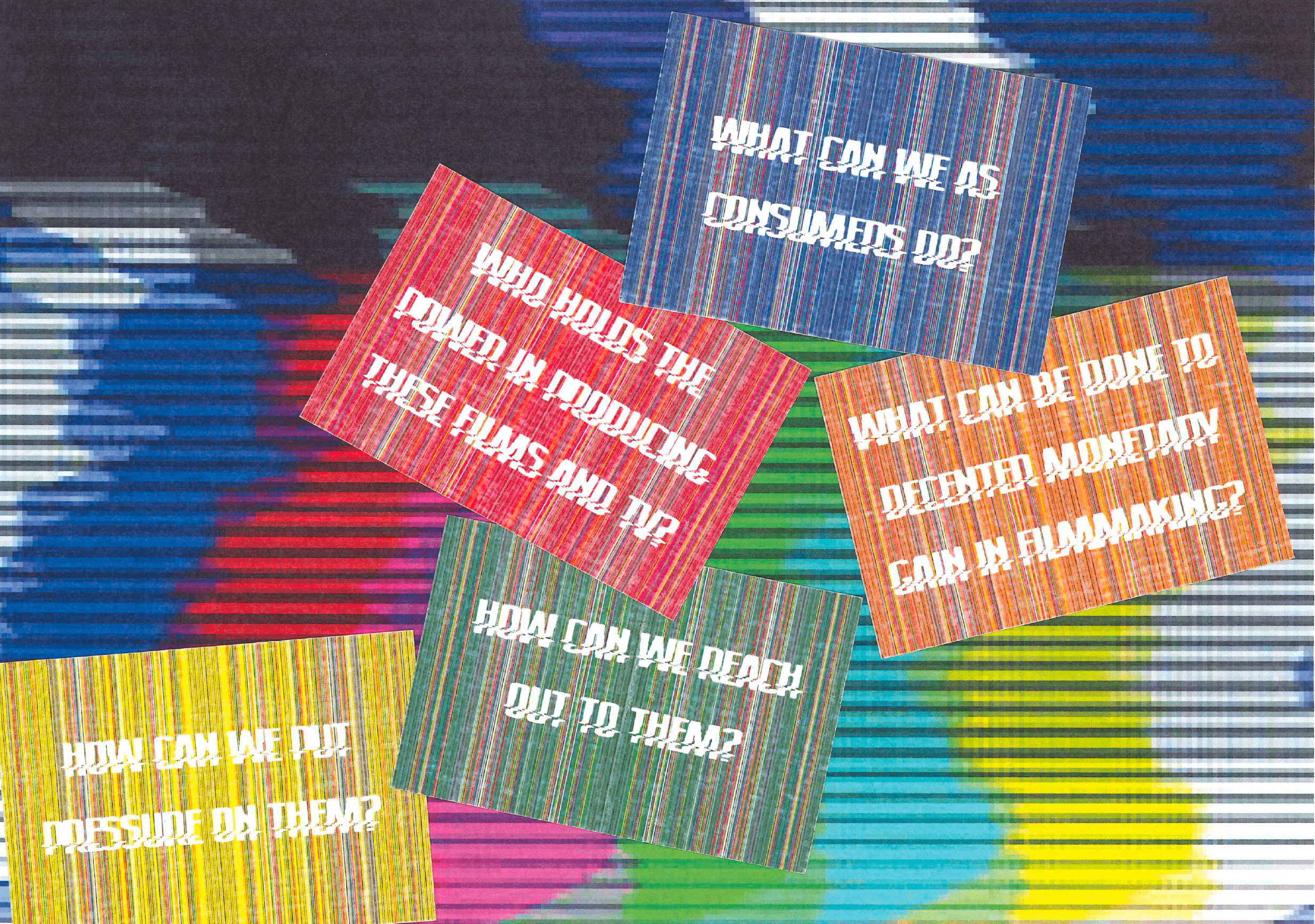
In order to bring my project out of a strictly +Change context I contacted two groups, one being a few attendees of RFSL Kalmar Queerhäng that I had collaborated with throughout my project, so that I could have a discussion about my project and topic from a queer consumer perspective. The second group was three film students at Linnaeus University, whom I contacted in order to get a film creation-centered perspective as well. As well as this I created cards that worked in addition to my project to open up and guide the discussion in case the conversations ever went too off-track and would need some slight direction.
References
Sánchez-Soriano, J. J., & García-Jiménez, L. (05/07/2015). The media construction of LGBT+ characters in Hollywood blockbuster movies. The use of pinkwashing and queerbaiting. Revista Latina de Comunicación Social, (77), 95-116. https://www.doi.org/10.4185/RLCS-2020-1451
Nordin, E. (05/07/2015). From Queer Reading to Queerbaiting : The battle over the polysemic text and the power of hermeneutics (Dissertation). Retrieved from https://urn.kb.se/resolve?urn=urn:nbn:se:su:diva-118819