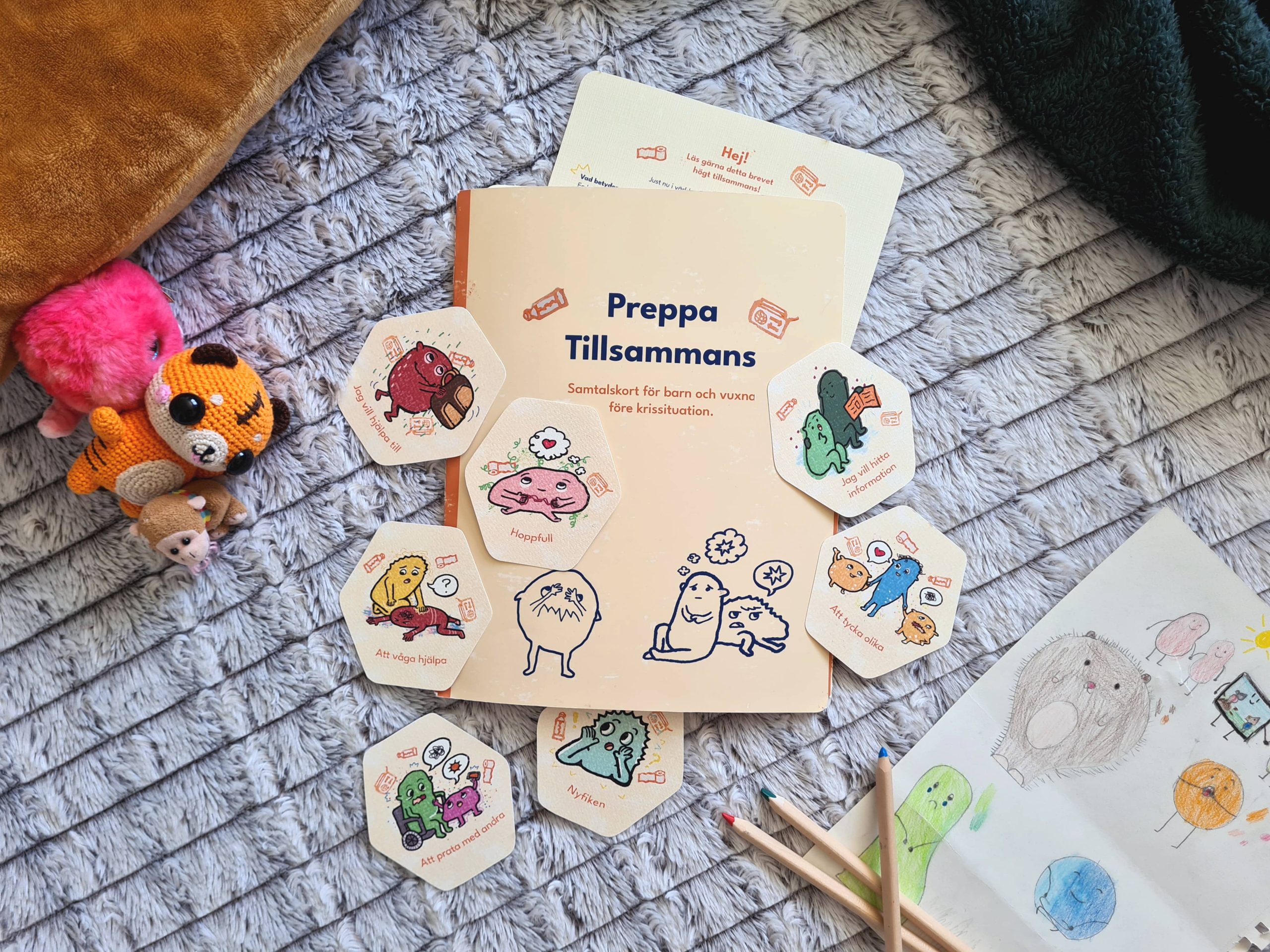
Preppa Tillsammans / Prepare together – Conversation cards for children and adults before a crisis situation
Preppa Tillsammans is a toolkit aimed to create a safer way of communicating between children and adults about crises before they may occur. With the help of visual interactive cards and instructional letters it creates horizontal communication between the participants.
In the beginning of 2024, military authorities stated that all Swedish people need to be ready for war. The demand created worry and panic amongst both adults and children, making them wonder when and what could potentially happen. It was only when questioned by the children’s news show Lilla Aktuellt that the communication shifted to a less strict demand and more so a request. It made me wonder why the communication to children before a potential crisis comes secondary, if at all, and what would happen if visual communication made this its priority?
What if crisis communication to children was a priority?
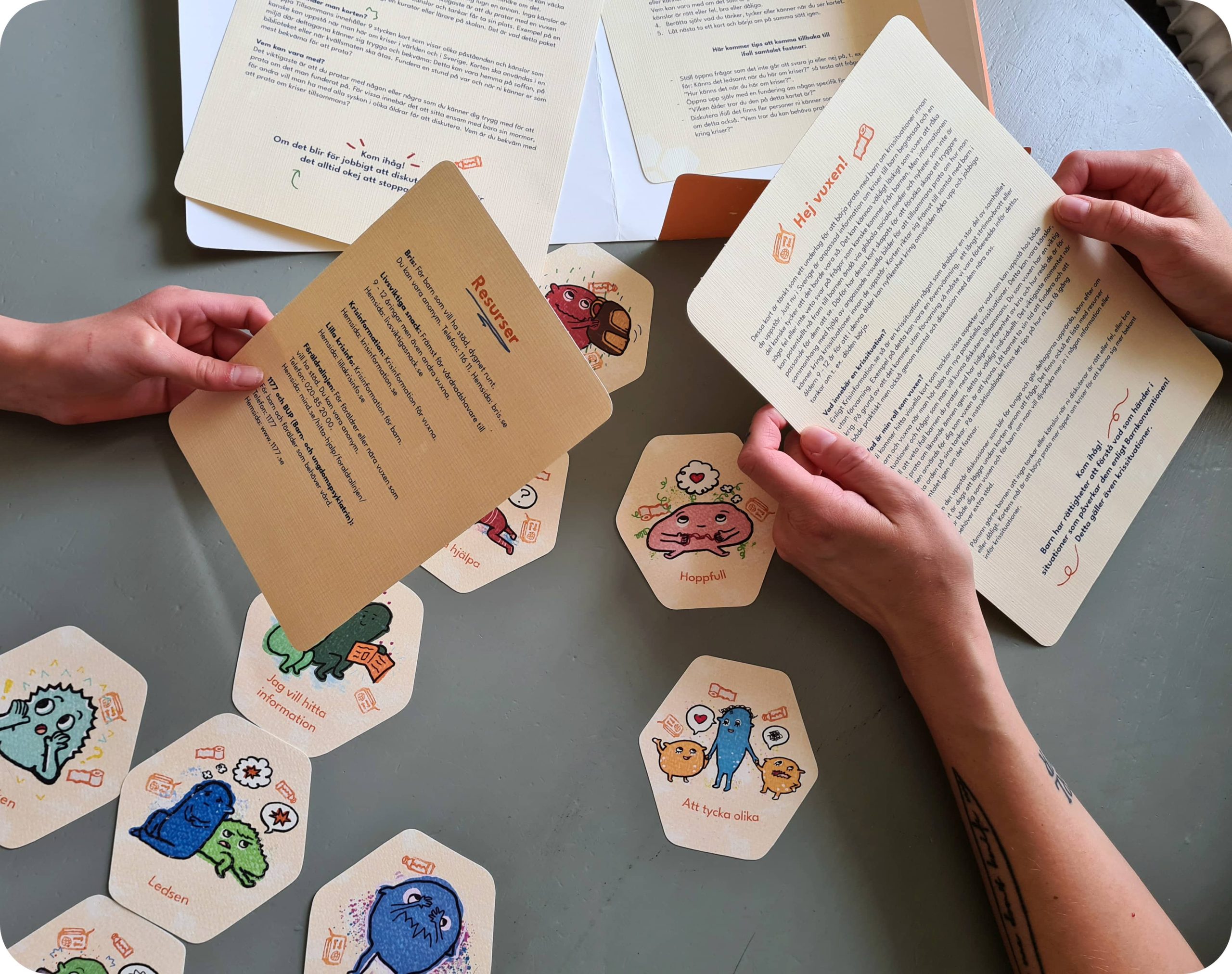

When researching what material was available for children regarding crises, the main resources were fictional literature or digital media. The narratives were also exclusive to the time period during or after a crisis. Previously the information has gone from top to bottom quite clearly, from authority to parent to children, and I wanted to go beyond this when trying to create a new change for people to feel safer discussing this complex topic. I decided to use the cards format for its interactive and adaptable use and with the hexagonal shape it creates connection to each participant’s cards, allowing us to see a whole picture.
I wanted to focus on a specific age range that was missing from the narratives as well, which were ages 9–12 years old. It’s a special “in-between-age” where most children know how to read and write independently and therefore have a bit of autonomy in their reflections, whilst they may not feel fully independent from their caregivers just yet. I also reflected throughout my process that the children’s focus should not lie on the responsibility of the practical demands for preparation, rather it should focus on creating a safe space for them to discuss their thoughts and feelings openly together.

The illustrations were created with the idea that you can read the scenarios visually and instinctively, allowing the discussions to focus more on the imaginary reflections between participants. The scenarios that were chosen take into account feelings that may occur, which can be both upsetting and hopeful, and also discussion starters such as what is the difference between wanting to help and daring to help.
When testing Preppa Tillsammans with a parent and child, I gained valuable insight in how the toolkit helped them proceed in their conversation about crises. Their different perspectives on how a crisis would affect their home, school and even if they were apart showed new awareness of what they needed to consider for the future. The need for consistent adaptability and change is required for both preparation for crisis and when designing this toolkit, even with the outcome being quite simple: 9 cards, 2 letters, 1 instruction manual and a resource sheet all in a folder. It’s gone through many layers of reflections and tryouts to reach this point. When discussing the project with my social circles it has confirmed the need for a communication on crisis preparation that doesn’t invoke worry or panic, both for children and adults. I wish the future of Sweden’s preparatory information would take in consideration the multifaceted challenges that the civilians may encounter, including the youngest of our generations, and the importance of including those that will be affected by global consequences despite them not having “responsibility”.