Talk like Your Village depends on it – Improving communication through service design in rural areas for long-lasting progress

In this project, I worked towards improving the communication within the village of Kalvsvik in Småland, Sweden, by applying service design methods. A vaguely defined problem was presented to me:
There is a problem with our communication. We are having a hard time reaching out to people.
Some residents were content with the current situation of communication practices, while others were dissatisfied and expressed the strong wish to develop them.
Why communication matters
Villages are often overlooked when it comes to where development efforts are applied. Although this shouldn’t be the status quo, many villages have to become active themselves in order to secure their existence. By creating better communication structures within communities, we can amplify voices and rally people together to achieve shared goals. Actions that derive from collective efforts hold a lot more potential to create long lasting change than individual efforts.
Designing to communicate
I took on the role of a communicator by approaching the community in Kalvsvik. I collected opinions, ideas and perceived challenges from residents and representatives of the associations to find the best approach for understanding as well as improving the situation. The findings from this research were reflected back to the residents in order to provide them with an overview of the current situation. This was done with the aim to help articulate their ideas and drive self-reliant change.
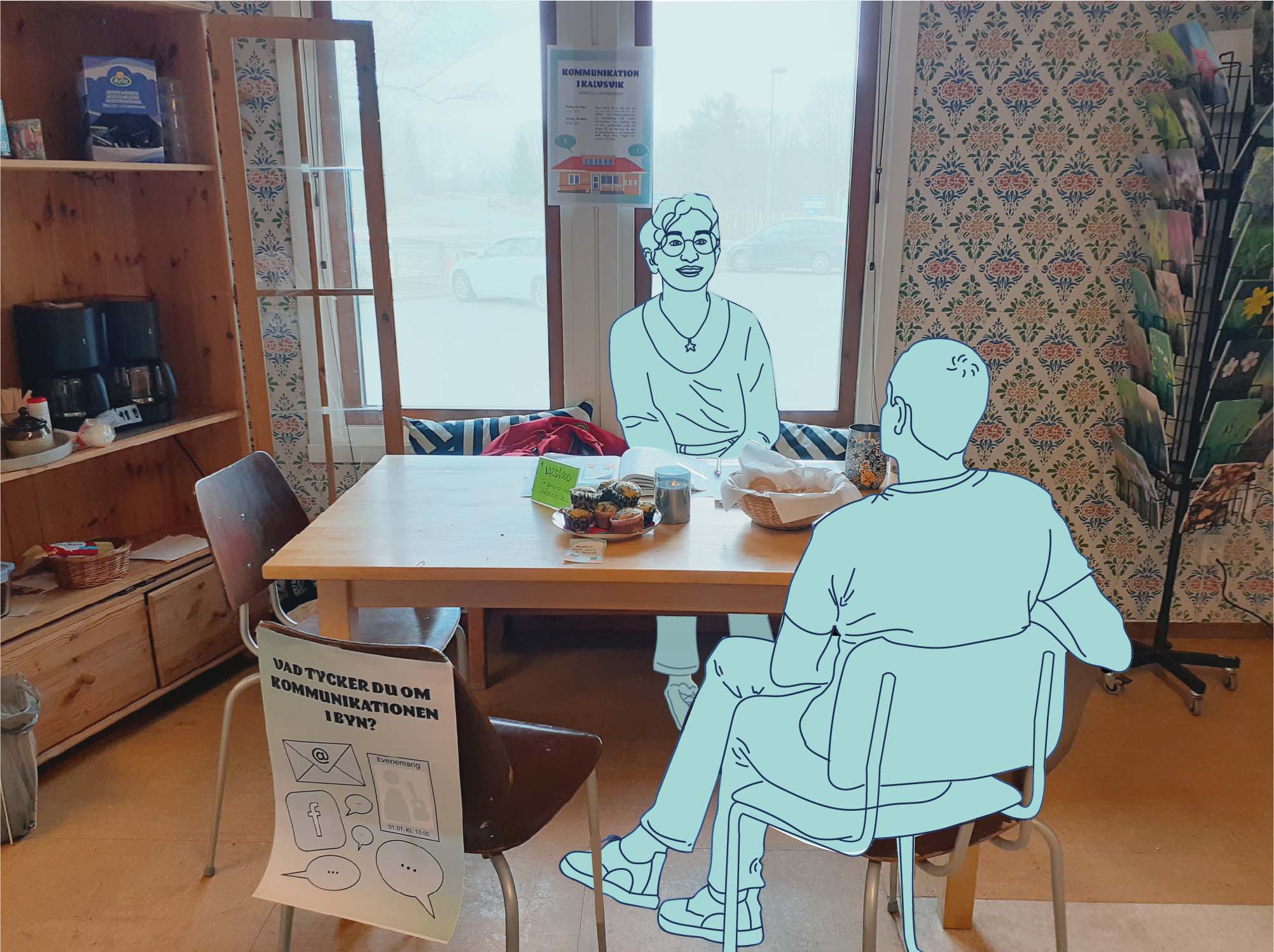
Interviewing a Kalvsvik resident in the local convenience store
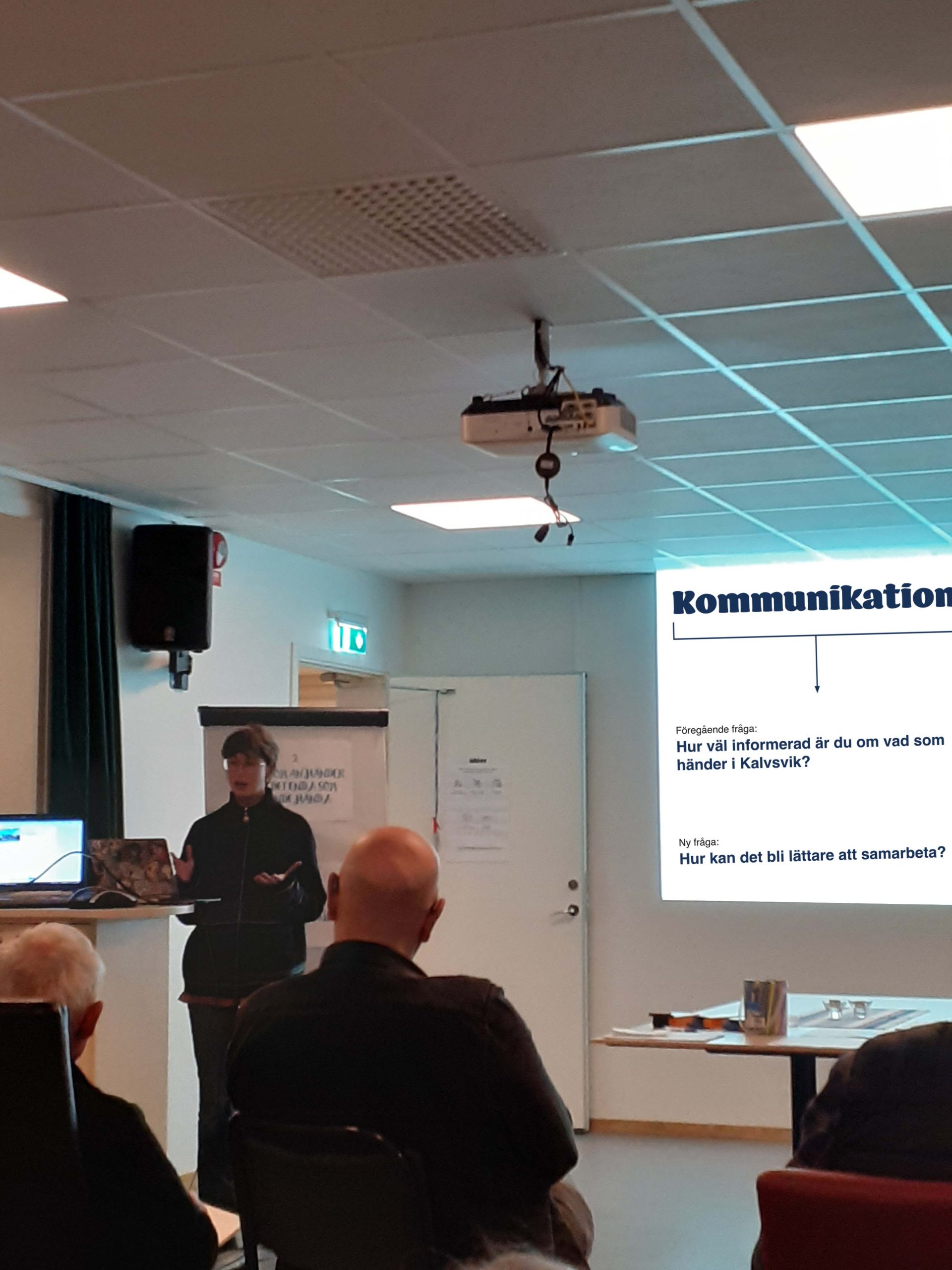
Presenting the opinions, ideas, and challenges I came across to the community of Kalvsvik
“Positive social change results mostly from connecting more deeply to the people around you (…), from coordinated rather than solo action.” – Rebecca Solnit, 2019
The Will to Change and the Ideas: It’s all there!
At the core of my project was the conviction that any change of significance requires collective effort. No individual can affect lasting change alone.
In a workshop, which I held with representatives of three associations in Kalvsvik, I focused on supporting existing efforts in the community through effectively exploring communication approaches and ways to create teams. A collaborator expressed their delight in finding like-minded individuals sharing their wish for positive transformation:
“I am so happy to see that there’s others who think the same as me, that we’re a little group that wants to make change happen.”

Impressions from the workshop

Collected ideas on how to improve the communication in Kalvsvik
“Positive social change results mostly from connecting more deeply to the people around you (…), from coordinated rather than solo action.” – Rebecca Solnit, 2019
Guided Action
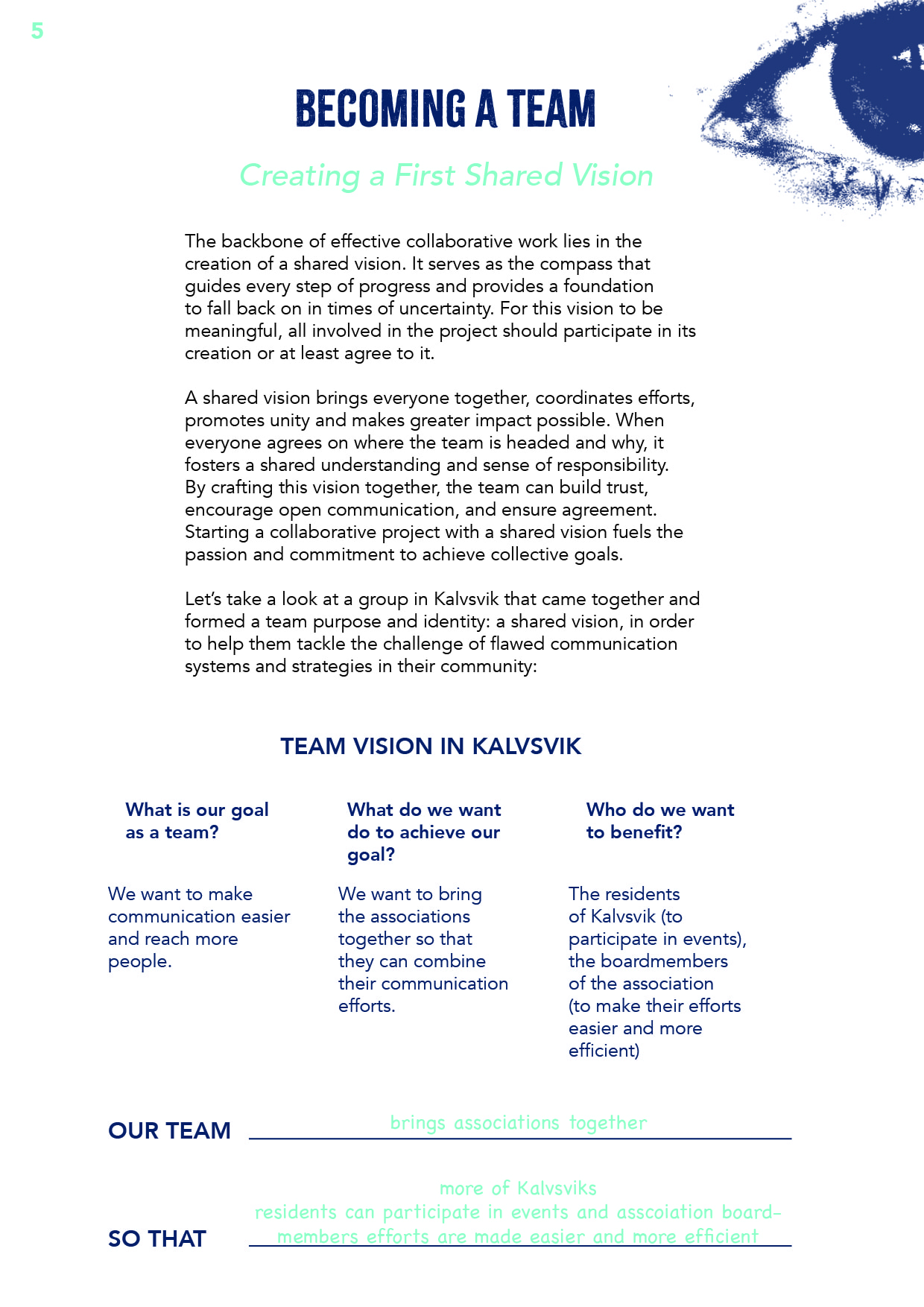
Throughout the project, I have been working towards an outcome that would help Kalvsvik municipality realize the ideas and potential that lies within their community. It is of great importance that they could act with autonomy. External support can be beneficial, but it shouldn’t be a necessity, that’s why I developed a comprehensive guide to facilitate projects independently. It provides aspiring change agents with the tools they need to initiate projects using methods that help them create a sense of clarity about the project.
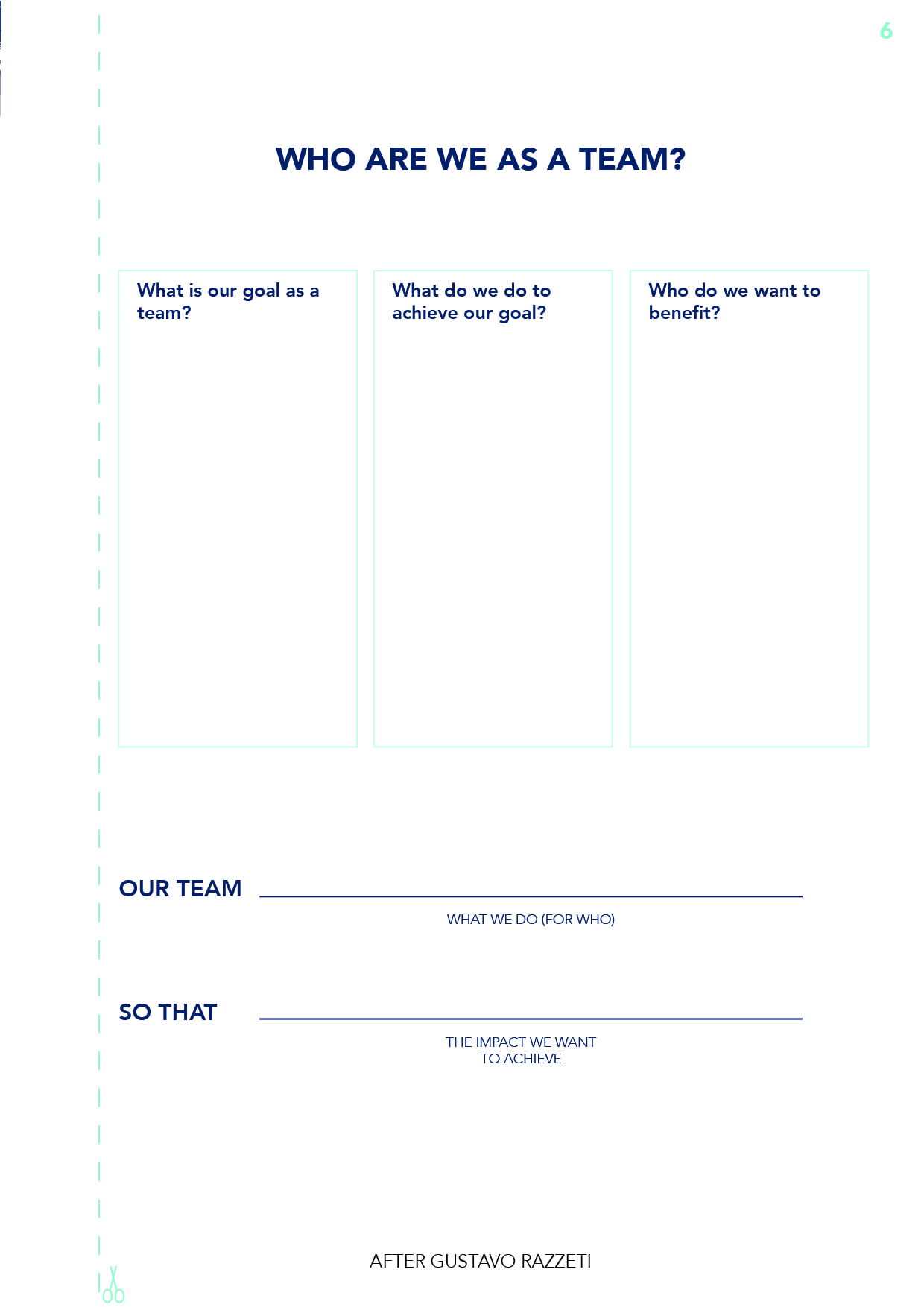
Examples of this are texts explaining what is important to pay attention to when starting a project. These are accompanied by templates that can be filled out by the reader in order to strengthen their understanding of what they want to achieve, as well as defining aspects of their project.
While success of course isn’t guaranteed, the guide provides a starting point and methodological framework for independent action. It aims to be an incentive for beginning a journey of change in villages like Kalvsvik, laying the foundation for long lasting positive change.

Get access to the full guide here.
References
Solnit, Rebecca. 2019. “Rebecca Solnit: When the Hero Is the Problem.” Literary Hub (blog). April 2, 2019. https://lithub.com/rebecca-solnit-when-the-hero-is-the-problem/