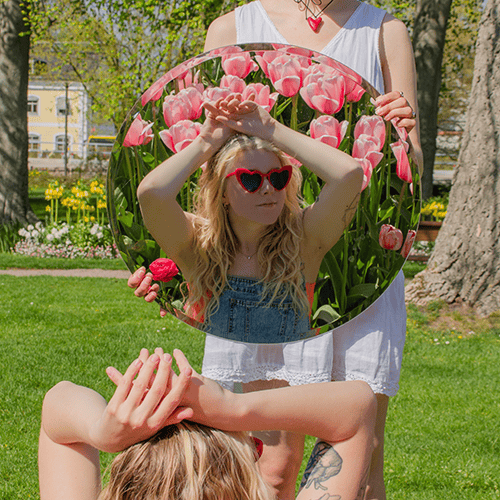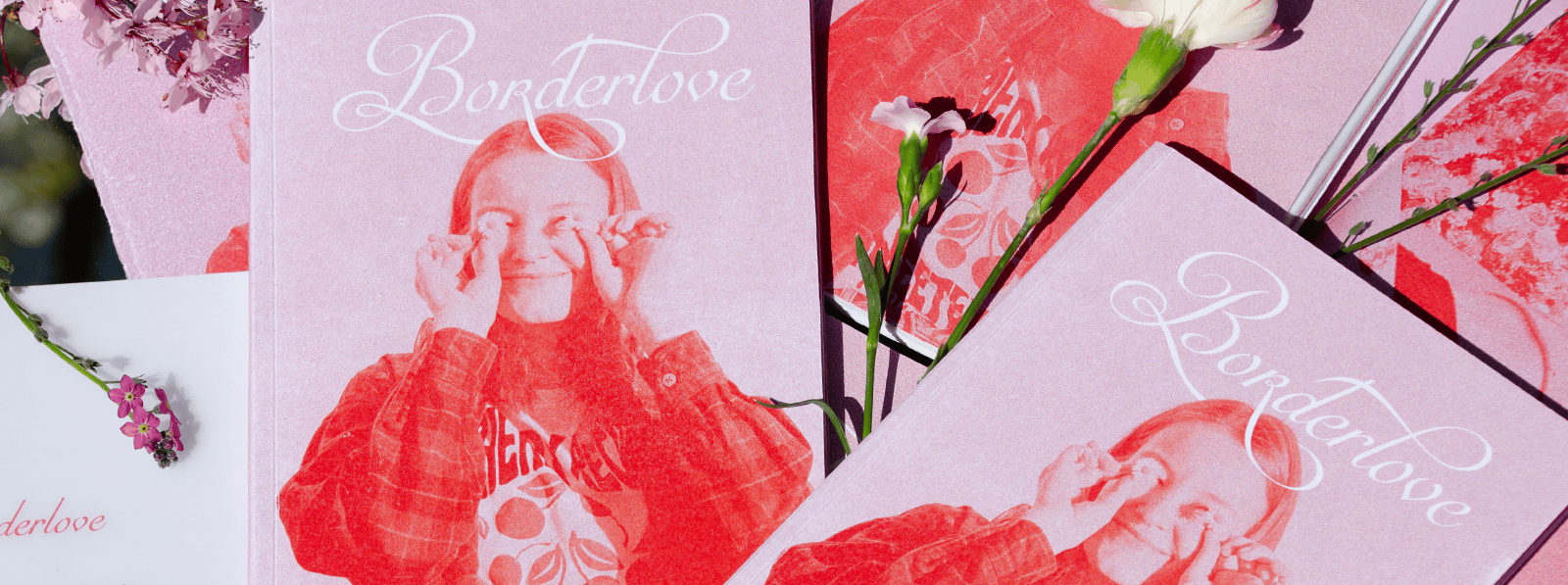
Borderlove – An artist book featuring collaborative storytelling, poetry, and visualisation, offering a glimpse into the lived experience of a woman with borderline personality disorder
Borderlove is a project formed in a close collaboration between close friends Lauretta Kubbi and Jaanika Malla whose intent is to make a change with narrated poetry, visualisation and materialisation as an artist book that presents difficulties experienced by a woman with borderline personality disorder. The project questions to which extent Borderlove can make a change by showcasing that our current patriarchal norm in a society suppresses physically, mentally, spiritually and emotionally many, but especially women with mental disorders.

Current modern world is without a doubt the most medically advanced period of time in a mankind’s history and yet the prevalence of mental illness is on the rise. In 2011 there has been a study released by the European College of Neuropsychopharmacology (ECNP) which states that Europe’s mental and neurological health in decreasing and reveals that mental disorders have become Europe’s largest health challenge in the 21st Century (Wittchen et al 2011).

Stresses of being a woman with BPD in a patriarchal society
The project focuses specifically on borderline personality disorder in women because recognition of BPD is widening in our society and there is an increased number of references to the disorder in popular books, films and TV shows (Kreisman and Straus, 2004). It’s generally known that mass media is responsible for negative representation and stigmatisation of mental health and illnesses but BPD is unfairly and mostly portrayed in pop culture by women. In a movie Bullet Train (2022), Brad Pitt’s character arrogantly suggests as a joke a cold-blooded female villain to read Surviving Borderline Personality Disorder, which is the most recent example to name that strengthens the negative stereotypes and stigma related to BPD in women. The stigmatisation is real, relevant and present.
BPD is diagnosed much more frequently in women than men, but the true gender prevalence is yet to be determined due to the differences in the clinical presentation of the disorder in men and women. It is suspected that the gender distribution of BPD is fairly equal, but men and women tend to exhibit different behaviours based on the expectations and social conditioning of their gender.

Bradley et al (2005) state that the expression of BPD traits in adolescents was found to be gendered, with girls being more internalising and emotionally expressive whereas boys were found to be angrier and display more externalising behaviour. When women are constantly silenced, belittled, made fun of, or not taken seriously, it is natural for them to feel self-conscious emotions such as shame, guilt, self-contempt, and self-disgust (Lewis, 1992). According to an article (Winter et al 2017), people with BPD experience low self-esteem and have a negative concept of self as they are more prone to negative emotions directed at themselves. But women with BPD internalise their negative emotions and struggle with low self-esteem not only because of their diagnosis but also because of their gender.
When it comes to gender and women, we live in a normality that benefits a culture of patriarchy and despite resistance is still over powering and oppressing others by placing concerns of men first in aspects of all important fields of life like social, economic, cultural, academic and medical. The norms of a patriarchal society tend to have specific expectations towards gender, and people who do not follow them are prone to feeling invalidated, rejected, and oppressed. This is especially true for the women who do not fit into these norms or who want to challenge that discrimination – more so for women who have been diagnosed with BPD facing stigmatisation by the public today.
Women with BPD may already face more frequent experiences of invalidation and rejection due to the symptoms of the disorder.
Living in a patriarchal society can reinforce negative beliefs about oneself and contribute to the development of BPD or worsen the experiences of the people already diagnosed due to the stigma and discrimination surrounding mental health. The intersection of living in a patriarchal society and having BPD is complex. The reinforcement of invalidation, rejection and negative self-concept makes it challenging for women to break the cycle of dysfunction and seek recovery.

Necessity for change
Change is needed, especially as suicide rates among BPD patients are one of the highest of mental disorders. According to Paris (2019), up to 10% of BPD patients die by suicide, and research data confirms that suicide prevention for BPD is not effective. Hopelessness and feelings of having no control or improvements are the main reasons for suicide, and not depression (Mehlum et al 2019).
Therapy can help encourage hope and inspire people with BPD to build a life worth living, reduce the risks of self-harm, and assist with developing coping skills. But women with BPD must be in an environment that nurtures hope within them, which currently it isn’t. This further supports the necessity for change and dismantlement of patriarchy for a more sustainable future with stronger empathy and support towards each other.

Project’s outcome
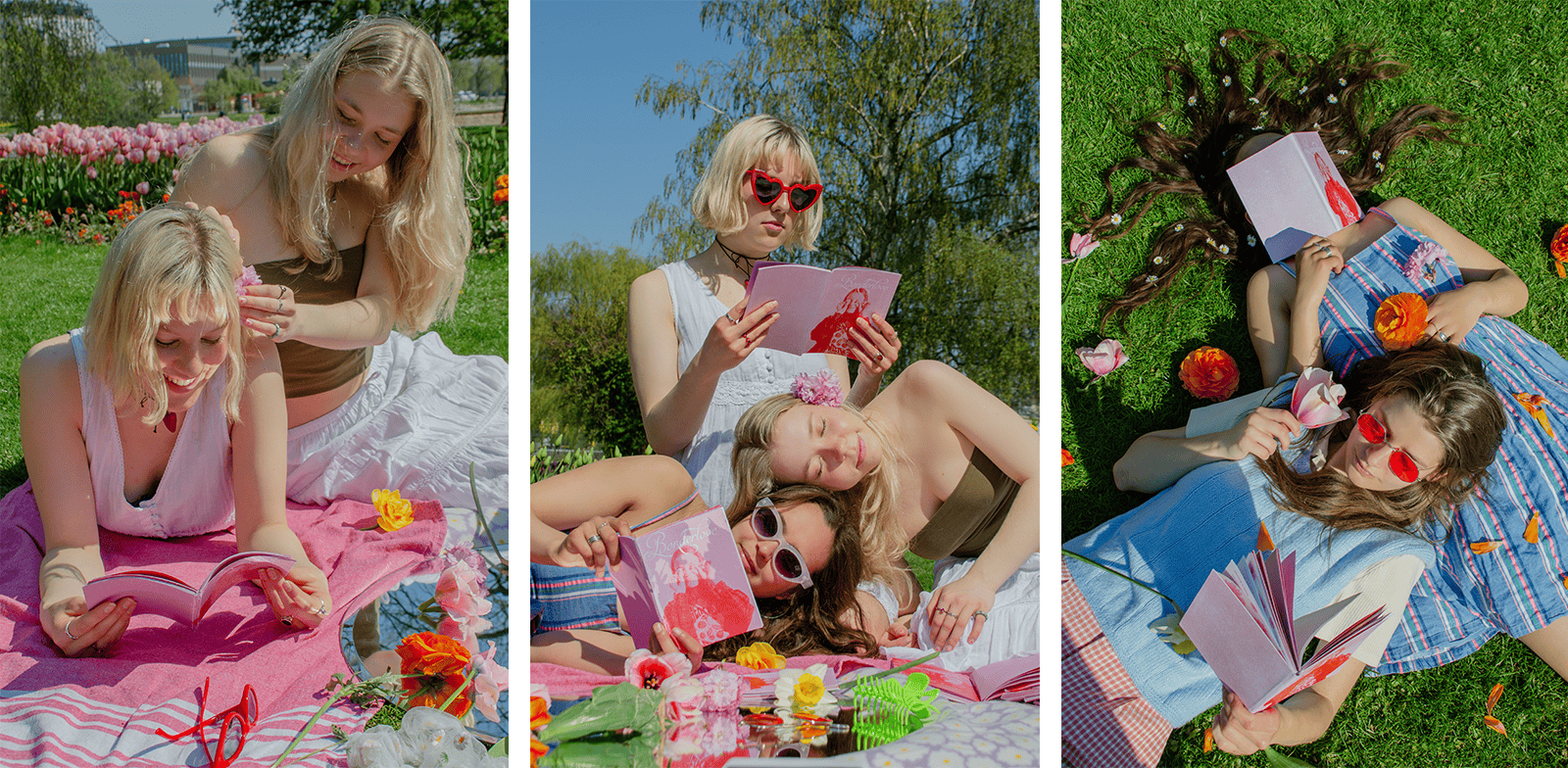
Borderlove consists of Jaanika Malla’s poetry that is based on her personal experiences throughout the whole book. The poetry is divided into four naturally progressing chapters to represent different emotional stages from falling in love, facing difficulties in relationships, breaking up, and in the end finding strength and empowerment of being a woman while living with BPD. The poetry is feminist, in certain parts political but mostly very open and honest. It is accompanied by either Malla’s personal photos or my visualisations, digital editing and photography.
As a visual communicator I wanted to contribute to a change by dedicating the project to represent women with BPD in a more empathic and human way. My goal was to distance the visualisation from representing them as someone who needs to be feared because they are “different”, and instead make their experiences relatable. I was aiming to erase the created distance between people with BPD and the rest of society, and to challenge the negative representation and stigma found in pop culture, real life or online.
See the artist book in full.
The highly important part of my project is a close collaboration with my long-time friend Jaanika, who is a MA Cognitive Science student working on a thesis titled “Phenomenology of Identity Disturbance and Affective Instability in Borderline Personality Disorder”. Her extensive knowledge on BPD as well as creative poetry writing has been crucial to the project, and I would like to thank her for her thorough input throughout the process. Our shared beliefs and long discussed topics in connection to the challenges of a modern woman have been the driving force behind this project for both of us. If we wouldn’t do this, who would?

References
Bradley, R., Zittel Conklin, C., & Westen, D. (2005). The borderline personality diagnosis in adolescents: gender differences and subtypes. Journal of child psychology and psychiatry, and allied disciplines, 46(9), 1006–1019. https://doi.org/10.1111/j.1469-7610.2004.00401.x
Kreisman, J. J., MD, & Straus, H. (2004). Sometimes I Act Crazy: Living with Borderline Personality Disorder. John Wiley & Sons.
Lewis, M. (1992). Shame: The exposed self. Free Press.
Mehlum, L., Ramleth, R. K., Tørmoen, A. J., Haga, E., Diep, L. M., Stanley, B. H., Miller, A. L., Larsson, B., Sund, A. M., & Grøholt, B. (2019). Long term effectiveness of dialectical behavior therapy versus enhanced usual care for adolescents with self-harming and suicidal behavior. Journal of child psychology and psychiatry, and allied disciplines, 60(10), 1112– 1122. https://doi.org/10.1111/jcpp.13077
Paris J. (2019). Suicidality in Borderline Personality Disorder. Medicina (Kaunas, Lithuania), 55(6), 223. https://doi.org/10.3390/medicina55060223
Winter, D., Bohus, M., & Lis, S. (2017). Understanding Negative Self-Evaluations in Borderline Personality Disorder-a Review of Self-Related Cognitions, Emotions, and Motives. Current psychiatry reports, 19(3), 17. https://doi.org/10.1007/s11920-017-0771-0
Wittchen, H. U., Jacobi, F., Rehm, J., Gustavsson, A., Svensson, M., Jönsson, B., Olesen, J., Allgulander, C., Alonso, J., Faravelli, C., Fratiglioni, L., Jennum, P., Lieb, R., Maercker, A., van Os, J., Preisig, M., Salvador-Carulla, L., Simon, R., & Steinhausen, H. C. (2011). The size and burden of mental disorders and other disorders of the brain in Europe 2010. European neuropsychopharmacology: the journal of the European College of Neuropsychopharmacology, 21(9), 655–679. https://doi.org/10.1016/j.euroneuro.2011.07.018